
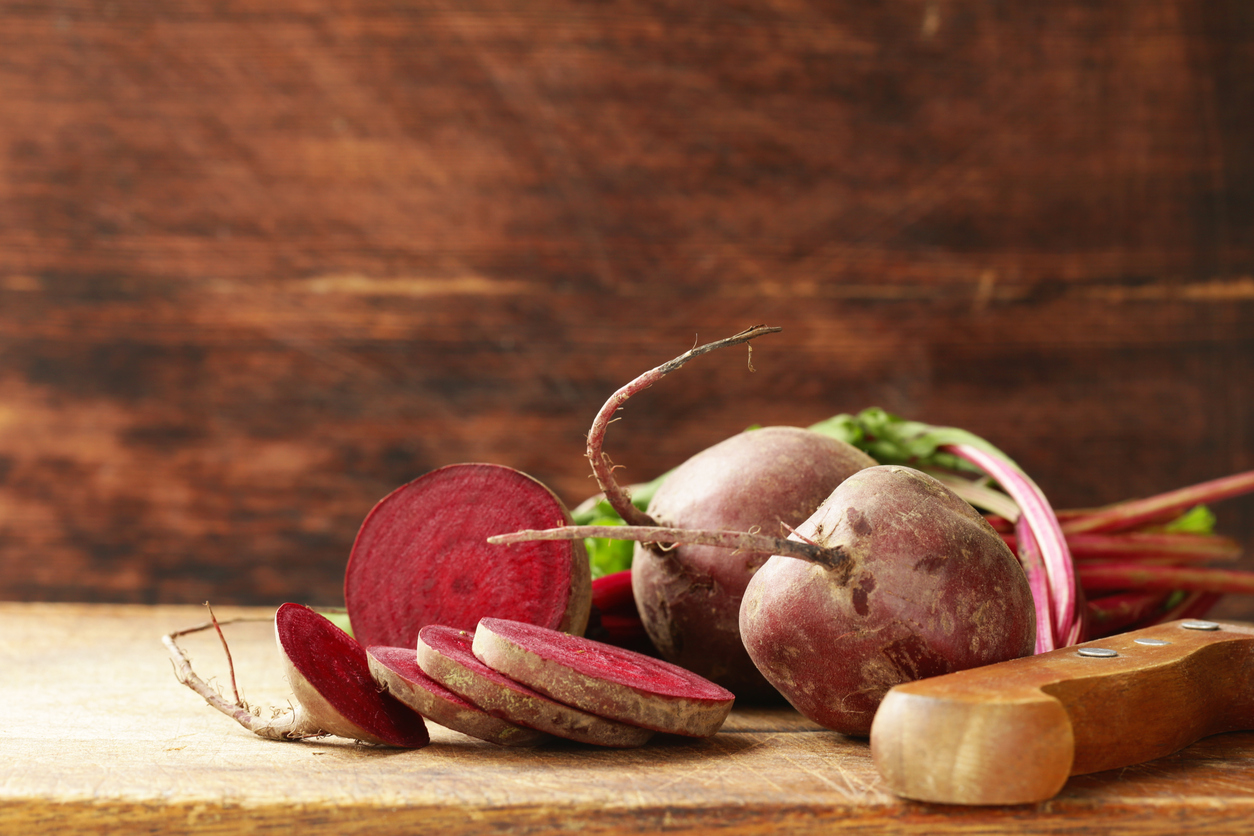
Beets don’t always get the recognition they deserve, but they’re earthy, naturally sweet, and full of color, making them just as perfect in a salad as they are in a dessert. They’re a cool-weather crop that shows up in many farmers markets from early summer through late fall, with California among the top U.S. producers; with New York, Wisconsin and Texas as other growing states. The good news is they’re readily available near you.
Beets have a reputation for being messy to work with, and it’s true that their deep red juice can stain just about anything it touches. But cutting beets doesn’t have to be a hassle once you know a few simple techniques. Here’s how to do it cleanly and safely.
RELATED: Can You Freeze Beets? Here’s What Happens When You Do
Should You Cook Beets Before or After Cutting?
This depends on your method. For roasting, beets are often cut before cooking to speed up the process. For boiling or steaming, many people prefer to cook beets whole first, then peel and cut them once they’re tender. Cooking whole also helps retain more color and nutrients, since less of the beet’s surface is exposed during cooking.
If you’re short on time, cutting before cooking works fine too, just expect slightly more color loss into the cooking water.
Tools You’ll Need
You likely have all the tools you need in the kitchen to cut beets.
- A sharp chef’s knife
- A sturdy cutting board
- A vegetable peeler
- Optional: food-safe gloves to prevent stained hands
A plastic or non-porous cutting board is usually the better choice for beets over wood. Beet juice can stain wood boards, and porous surfaces are harder to fully clean of color once it sets in. Plastic boards also wipe clean more easily and can go in the dishwasher if the staining is stubborn. A slightly larger board works well too, since it gives you more room to work without juice running off the edges onto your counter. If staining does happen on a light-colored board, a paste of baking soda and water, or a quick scrub with lemon juice and salt, usually lifts most of it. Now you are set up and ready to cut your beets.
How to Cut Beets Step by Step
- Wash the beets by scrubbing off any dirt under running water before doing anything else.
- Cut the stem end and the root tip with your knife.
- If the beets are raw, peel the beets vegetable peeler to remove the skin. If they’re already cooked, the skin should slip off easily by hand or with a paring knife.
- Stabilize the beet by slicing a small flat edge off one side so the beet sits steady on the cutting board without rolling.
How to Cut Your Beets 7 Different Ways
How to Cube or Dice Beets

Stack the slices from your beet and cut them into strips, then turn and cut across to create cubes. Smaller dice work well for salads or quick-cooking dishes, while larger cubes hold up better in roasting or stews.
How to Slice Beets
Cut the beet into even rounds or planks, depending on the thickness you need. Even slices help the beet cook more evenly, whether you’re roasting or boiling.
How to Wedge Beets
Cut the peeled beet in half through the root end, then cut each half into thirds or quarters depending on the size of the beet. Wedges hold their shape well through roasting and make an easy, rustic side dish without much prep work.
How to Grate or Shred Beets
A box grater or food processor turns raw beets into fine shreds, ideal for raw salads or slaw. Peel the beet first, then run it against the coarse or fine side of the grater depending on the texture you want. A food processor with a shredding attachment makes quick work of larger batches.
How to Julienne Beets

Julienning gives you thin, matchstick-sized pieces that work well raw in slaws, salads, or as a garnish. Start by cutting the beet into thin planks, about an eighth of an inch thick. Stack a few planks at a time and slice them lengthwise into thin strips, aiming for a similar thickness to keep the pieces even. A mandoline can make this step faster and more consistent if you’re working with a larger batch.
How to Ribbon Beets
Run a vegetable peeler along the length of a peeled, raw beet to create thin, wide ribbons. This works best with larger beets, which give you longer, more usable strips. Ribbons make a nice raw garnish or add texture to a salad without needing to cook the beet at all.
How to Spiralize Beets
A spiralizer turns beets into long, noodle-like strands, often used as a low-carb pasta substitute. Peel the beet and trim the ends flat before running it through the spiralizer, which helps it feed through more evenly.


