
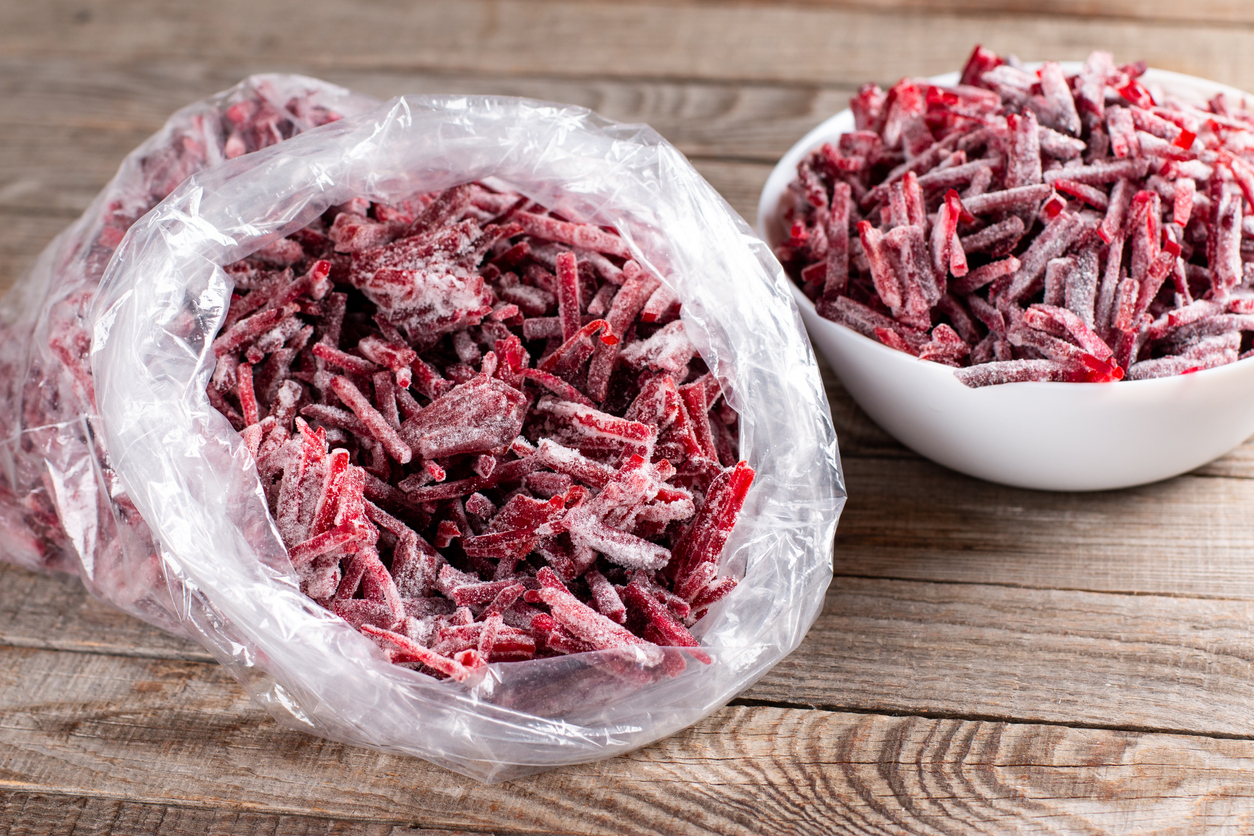
Yes, you can freeze beets, and it’s one of the easiest ways to keep a big harvest or grocery haul from going to waste. Whether you grew a garden full of them or bought too many at the farmers market, freezing lets you lock in their flavor and nutrients for months. But beets aren’t quite as simple as tossing them straight into a freezer bag. A little prep goes a long way toward keeping their texture and taste intact.
RELATED: 17 No Lettuce Salad Recipes You’ll Actually Crave
What Happens When You Freeze Beets
Beets are high in water content, which means freezing them raw isn’t a great idea. Ice crystals form inside the cells as the beets freeze, and when they thaw, those cells break down. The result is a mushy, watery vegetable that has lost much of its firm, earthy bite.
That’s why blanching beets before freezing matters so much. Blanching briefly cooks the beets, which slows down the enzyme activity responsible for loss of flavor, color, and texture over time. It also helps the beets hold their shape better once frozen and thawed. Skipping this step won’t ruin the beets completely, but you’ll notice a real difference in quality if you store them raw.
Freezing does soften beets more than fresh storage does, even with blanching. This isn’t a flaw, it’s just the nature of the process. Frozen beets are best suited for dishes where a softer texture is welcome, rather than for salads or dishes where you want a firm, crisp bite.


How to Freeze Beets
Freezing beets is a straightforward process once you know the steps. Here’s how to do it:
- Wash the beets scrubbing off any dirt under running water. Trim the greens, leaving about an inch of stem attached so the beets don’t bleed too much color while cooking.
- Cook the beets by boiling or roasting the beets until they’re fork tender. This usually takes 25 to 45 minutes depending on size. You can also blanch smaller beets in boiling water for 3 to 5 minutes if you plan to freeze them raw-ish, though full cooking gives better results.
- Let the beets cool until they’re easy to handle, then peel off the skins. The skins should slip off easily once cooked.
- Slice or dice the beets depending on how you plan to use them later. Smaller pieces freeze and thaw faster.
- Spread the beet pieces in a single layer on a baking sheet lined with parchment paper. Freeze for one to two hours until firm. This step prevents the pieces from clumping together in the bag.
- Transfer the frozen pieces into airtight freezer bags or containers. Squeeze out as much air as possible before sealing. Label with the date.
Flash freezing is optional but worth the extra time if you want to be able to grab a handful of beets without thawing the whole batch.

How Long Does It Last
Properly blanched and stored beets last about 10 to 12 months in the freezer. They’ll technically stay safe to eat beyond that, but the flavor and texture start to decline the longer they sit. For the best taste, try to use them within the first year.
Keep in mind that freezer burn can shorten this window if the beets aren’t sealed tightly. Using airtight, freezer-safe bags or containers and removing excess air makes a real difference in how well the beets hold up over time.
Best Ways to Use Frozen Beets
Frozen beets work best in dishes where their softened texture isn’t a drawback. Here are some of the best ways to use them:
- Smoothies
- Roasted alongside other root vegetables
- Soups
- Mashed and mixed with butter and herbs as a side dish
- Added to stews and braises
- Tossed into stir fries
- Blended into hummus or dips
- Baked into muffins, cakes, or brownies
- Homemade popsicles
Frozen beets skip well straight from freezer to pan in most cooked applications, which makes them a convenient shortcut for weeknight meals.
Can You Thaw It and Eat It Like Fresh?
You probably won’t want to. Once beets have been frozen and thawed, their texture is noticeably softer than fresh beets. They won’t have the same firm bite you’d expect from a fresh beet in a salad or slaw. If you’re craving that crunch, fresh is the way to go.
That said, thawed beets are perfectly fine to eat cold if you don’t mind the softer texture. They can be tossed into a salad in a pinch, though most people find they’re better suited to cooked dishes where the texture blends in naturally. Thaw them in the refrigerator overnight for the best results, or add them frozen directly into soups, stews, or roasting pans.
RELATED: Can I Freeze Rice? Yes! Here Is How
The Bottom Line
Freezing beets is a smart way to extend their shelf life and avoid waste, as long as you take the time to cook and prep them properly first. Skipping the blanching or cooking step leads to mushy, watery results, but done right, frozen beets hold their flavor well for up to a year. They’re best used in cooked dishes, smoothies, or purees rather than fresh salads, since freezing softens their texture. If you keep a stash in the freezer, you’ll always have a nutritious, colorful ingredient ready to go whenever a recipe calls for it.