
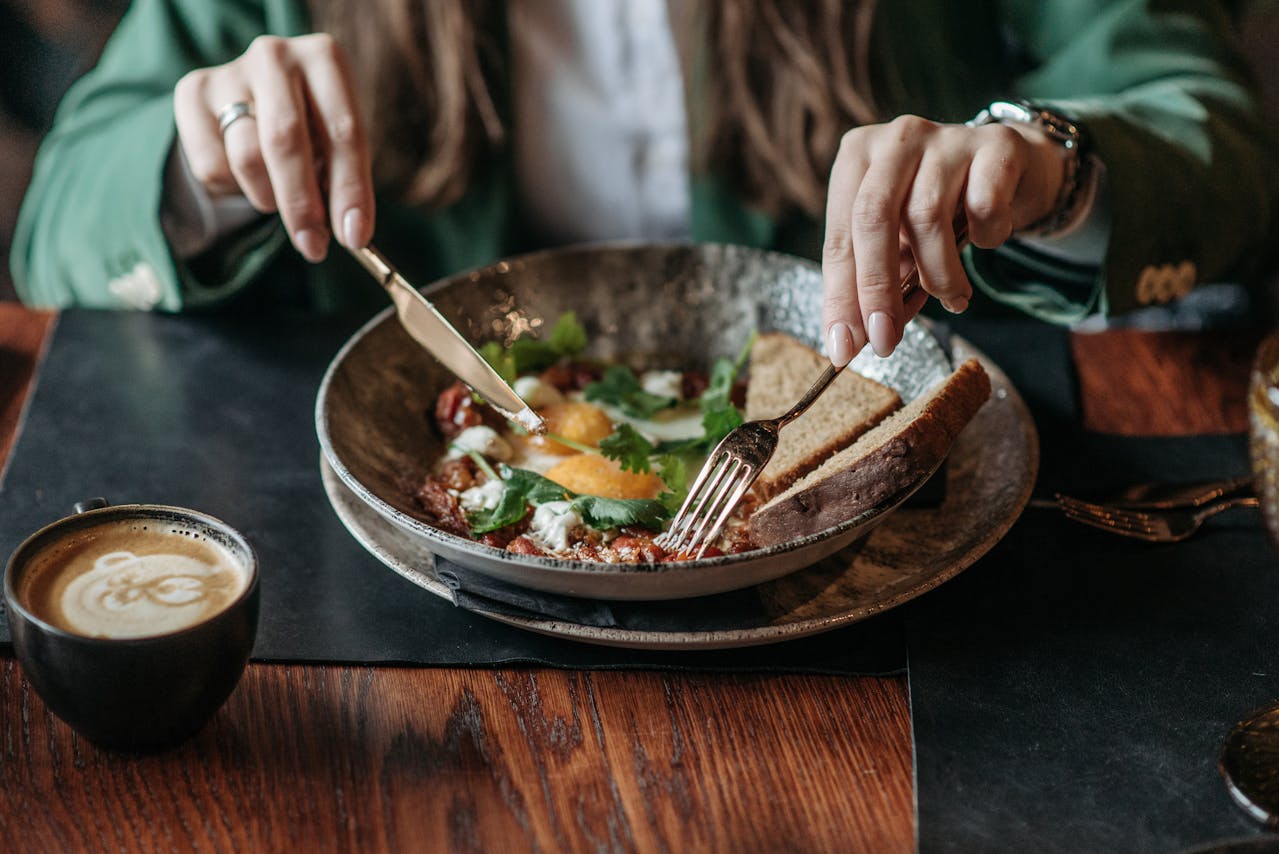
There’s a moment every solo diner knows well. You walk into a restaurant, the host looks past you for a second, and asks: “Just one?” You nod. They lead you to a table (sometimes a great one, sometimes the one next to the kitchen door) and you sit down, open your menu, and wonder what to do with your hands.
If that scenario makes you a little uncomfortable, you’re not alone. Most of us have been conditioned to think of eating as a social act. Meals are for dates, families, and catch-ups with old friends. Sitting alone in a restaurant can feel exposed, even a little sad, like you’re advertising to the room that no one wanted to come with you.
But here’s the thing: that feeling is almost entirely in your head. And once you learn to shake it, dining solo becomes one of the most quietly pleasurable things you can do for yourself.
Here are a few tips on how to have the best time dining solo.
SHARE TIDBITS
Christine Slater, author, Frugal to FI — shares her tidbits of experience in happily dining solo.
Start by Letting Go of What You Think the Room Thinks
Let’s address the elephant in the room first. You are not the subject of anyone else’s attention. The couple at the next table is absorbed in their own conversation. The group celebrating a birthday is three drinks in and focused entirely on themselves. The server has seen hundreds of solo diners this month alone.
The self-consciousness you feel is a projection: your own discomfort being reflected back at you as imagined judgment. Studies in social psychology call this the spotlight effect: we consistently overestimate how much other people notice and remember about us. In reality, nobody is watching you eat your pasta and feeling sorry for you.
Once you genuinely internalize this (not just tell yourself it, but feel it) the whole experience changes. You stop performing comfort and start actually being comfortable.
Choose the Right Seat
This is the most underrated practical tip in solo dining: where you sit matters enormously.
A two-top in the middle of a buzzing dining room can feel isolating. You’re surrounded by conversation but not part of any of it. Instead, look for:
- The bar or counter. This is the solo diner’s best friend. You’re naturally close to the bartender or kitchen staff, conversation happens organically, and you have something to look at. Many of the best solo dining experiences happen here. “I’ve had some of the best organic conversations when dining at the bar”, says Christine Slater. “For someone who is introverted, like me, and can only handle socializing in short spurts — it’s perfect.”
- A window seat. The street becomes your entertainment. People-watching is an ancient and deeply satisfying pastime, and a window table gives you a front-row seat.
- Open kitchen counters. If a restaurant has a chef’s counter or open kitchen seating, take it. Watching food being prepared is genuinely interesting, and chefs often enjoy talking to curious diners.
- A corner table. If you prefer privacy, a corner gives you a view of the room without putting you in the center of it.
Don’t be afraid to make a seating request when you book. A simple note “dining solo, would love a counter or window seat” is all it takes.
Give Yourself Full Permission to Be Present
One of the unexpected gifts of eating alone is that you can be completely, unapologetically present. There’s no conversation to maintain, no one to catch up with, no social obligation of any kind. It’s just you and the food.
Use that to your benefit.
Notice the way the dish is plated. Actually taste each element instead of talking through your meal. Pay attention to the texture of the bread, the balance of acid in the dressing, whether the wine opens up as it breathes. When you’re dining with others, so much of the meal passes in a blur of conversation. Alone, you can actually experience it.
This isn’t about being pretentious or performatively mindful. It’s just about slowing down enough to notice that the thing you’re doing, eating good food in a room someone cared about designing, is genuinely enjoyable.
The Phone Question (It’s More Nuanced Than You Think)
Every guide to solo dining will tell you to put your phone away. And there’s real truth to that: if you spend the entire meal scrolling, you’re not really dining alone, you’re just eating with worse company.
But the phone-as-villain framing isn’t quite right either. There’s a difference between using your phone to escape the discomfort of being alone and using it as a genuine companion to the experience. Reading a long article you’ve been meaning to get to, working through a chapter of a book on your Kindle, or even jotting down thoughts in your notes app, these can all enrich a solo meal rather than detract from it.
“I only use my phone as a companion to my dining out alone. My favorite thing to do when dining solo — is to catch up on good book. Whether that is an ebook or physical copy.” shares Christine Slater.
The test is simple: does it feel like avoidance, or does it feel like enjoyment? If you’re refreshing Instagram every 90 seconds because you don’t know what else to do, put it down. If you’re absorbed in something that genuinely interests you, that’s a fine way to spend a meal.
A physical book or magazine is, for many solo diners, the ideal companion. It signals to the room, and to yourself, that you’re here on purpose, settled and content.
Order Adventurously
When you dine with others, ordering often involves a kind of negotiation. You pick something safe because you might want to try your friend’s dish. You skip the thing you actually want because it’s expensive, or messy, or weird, and you don’t want to explain it.
Alone, none of that applies.
Order the thing that genuinely interests you. Get the tasting menu. Ask the server what they would eat. Start with dessert if you want. Order two appetizers instead of a main. Try that glass of wine you are curious about. Dining solo is a rare opportunity to entirely enjoy that meal on your own terms, and it’s worth taking full advantage of that freedom. “And that dessert is all yours. No need to share.” laughs Christine Slater.
Talking to your server helps here, too. A simple “I’m dining alone tonight, what would you recommend?” opens a real conversation and often leads to better food. Servers generally love a guest who’s actually interested in the menu.
Build the Habit Slowly
If the idea of sitting down alone at a proper restaurant feels like too much to start with, work up to it. Begin with a solo coffee at a café. Then lunch at a counter: lower stakes, shorter duration, more naturally casual. Then dinner somewhere you’ve always wanted to try but never had the right occasion for.
“It used to think dining solo was considered lonely, depressing thing to do. Was I wrong! It take a few tries to find your groove and feel confident. But once you do — it can be an awesome experience time and time again. You also realize restaurants are set up to cater to the single diner as well.” remarks Christine Slater.
Each time, notice that it was fine. Better than fine, probably. The accumulated evidence of your own experience is the most convincing argument there is.
Some of the best meals of your life will happen alone. Not in spite of the solitude, but because of it, because you were finally paying attention.


