
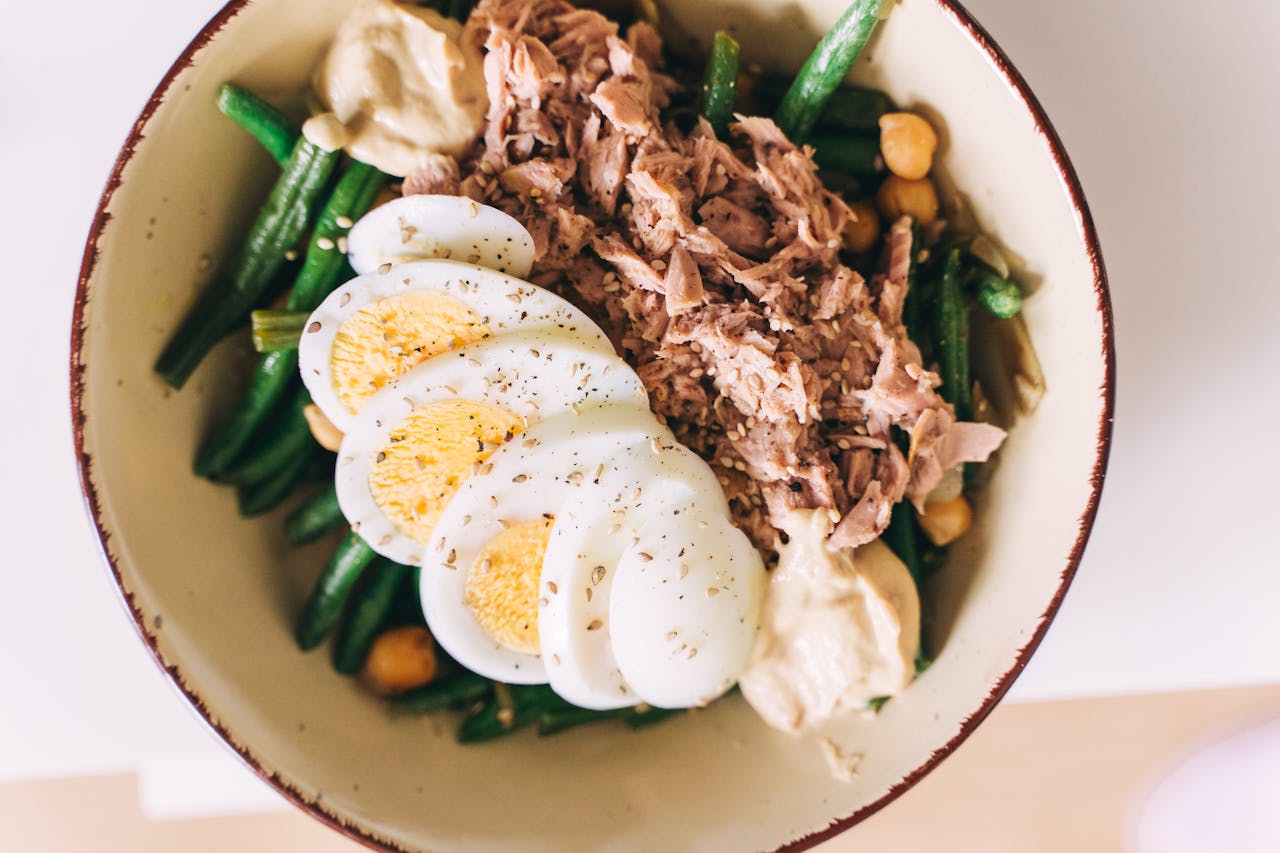
Your 40s and 50s bring a lot of wisdom, hard-earned confidence, and, let’s be honest, a body that plays by different rules than it used to. During peri-menopause and menopause, fluctuating estrogen levels can lead to muscle loss, slowed metabolism, bone thinning, mood swings, and energy crashes. The good news? What you eat has a powerful say in how you feel.
Protein is your best ally right now. It preserves lean muscle mass (which naturally declines after 40), supports bone density, stabilizes blood sugar, reduces hunger hormones, and even helps with mood regulation. According to Dr. Katherine Elizabeth Black and PA Penelope Matkin-Hussey, most women in this life stage need 25–35g of protein per meal which is more than mainstream advice has historically suggested.
Here are 10 wholesome, delicious, nutrient-dense protein sources to put front and center on your plate that are chosen with both your health and your grocery budget in mind.
01
of 10
Eggs

Protein: ~6g per egg | Cost: budget-friendly
Eggs are a near-perfect food — especially for women navigating hormonal shifts. They contain all nine essential amino acids, plus choline, which supports brain health and cognitive function (a great weapon against brain fog). The yolk is packed with vitamin D, which supports bone density and mood — two things that can take a hit during menopause.
How to eat them: A two- or three-egg scramble with leafy greens and avocado makes a blood-sugar-balancing breakfast that keeps you full for hours. At roughly $0.25–$0.35 per egg, they’re one of the best protein bargains at any grocery store.
02
of 10
Wild-Caught Salmon
Protein: ~25g per 3.5oz | Cost: mid-range to splurge
Salmon is practically a superfood for menopausal women. It delivers a hefty dose of complete protein alongside omega-3 fatty acids, which help reduce inflammation, support heart health (cardiovascular risk rises after menopause), and may ease joint pain and low mood. It’s also rich in vitamin D and calcium for bone support.
How to eat it: Baked salmon with lemon and herbs, flaked into salads, or as a simple weeknight fillet with roasted vegetables. To stretch your budget, frozen wild-caught salmon fillets are just as nutritious as fresh and significantly cheaper.
03
of 10
Edamame

Protein: ~11g per 3.5oz cooked | Cost: budget-friendly
Edamame (young soybeans) are one of the very few plant foods that deliver complete protein — meaning all essential amino acids. Soy also contains isoflavones, plant-based compounds that mimic estrogen in a gentle way and have been shown to help reduce hot flashes and improve bone density in some women.
How to eat them: Try them in this Crispy Rice Salad with cucumbers and edamame, blend into a vibrant dip, or enjoy simply salted as a snack. Frozen edamame bags from Trader Joe’s or Costco are a fantastic value and last for months in the freezer.
04
of 10
Chicken Thighs
Protein: ~26g per 3.5oz cooked | Cost: budget-friendly
Chicken is a lean, accessible, versatile protein that suits this life stage well. Thighs in particular have a little more fat than breast meat, making them more satisfying and flavorful — and they’re far less likely to dry out when cooking. The zinc in chicken also supports immune function and thyroid health, both of which can be affected during hormonal transitions.
How to eat them: Sheet-pan roasted with garlic, olives, and cherry tomatoes — minimal effort, maximum satisfaction. Bone-in, skin-on thighs are almost always the most affordable cut in the store.
05
of 10
Greek Yogurt

Protein: ~10g per 3.5oz (full-fat, plain) | Cost: budget-friendly
Greek yogurt is a gut-friendly, calcium-rich protein powerhouse. The probiotics support a healthy gut microbiome, which is increasingly linked to hormone regulation, mood, and inflammation. Calcium is critical during and after menopause when bone loss accelerates. Full-fat versions are especially satisfying and provide fat-soluble vitamins.
How to eat it: As a base for a savory dip, spooned over a fruit and seed bowl, or stirred into sauces instead of heavy cream. Buying the large 32oz tub of plain, full-fat Greek yogurt (Fage, Stonyfield, or Costco’s Kirkland brand) offers serious savings over individual cups.
06
of 10
Lentils
Protein: ~9g per 3.5oz cooked | Cost: one of the cheapest proteins available
Lentils are one of the most budget-friendly proteins you can buy — a one-pound bag can cost under $2 and yields multiple meals. Their high fiber content supports healthy digestion and feeds beneficial gut bacteria, which is important because gut health is closely tied to estrogen metabolism. They also provide iron (helpful if you’re experiencing heavy periods in perimenopause) and folate for cellular repair.
How to eat them: A warming red lentil soup, a hearty lentil and vegetable stew, or stirred into a curry. They cook faster than most legumes — no soaking required.
07
of 10
Cottage Cheese

Protein: ~12g per 3.5oz | Cost: budget-friendly
Cottage cheese has had a well-deserved comeback — and for good reason. It’s high in casein protein, which digests slowly and is particularly good at supporting muscle maintenance overnight. It’s also rich in calcium, B vitamins, and selenium, which supports thyroid function — often impacted during menopause.
How to eat it: Blended smooth and spread on toast with tomatoes and everything bagel seasoning, mixed into a high-protein pancake batter, or eaten straight from the container with berries and a drizzle of honey. Good Culture and Daisy are widely available, clean-ingredient options.
08
of 10
Lean Ground Beef
Protein: ~26g per 3.5oz cooked | Cost: mid-range
Lean ground beef is one of the most practical, nutrient-dense proteins you can keep on rotation. It’s rich in heme iron, zinc, B12, and creatine — nutrients that support energy, brain function, and muscle strength. Iron deficiency is common in perimenopausal women, and emerging research suggests creatine may specifically support cognitive function and muscle health in menopausal women. Grass-fed beef has a more favorable fat profile, but conventional 90/10 lean ground beef is still a nutritional win and widely affordable.
How to eat it: A simple taco bowl with black beans and salsa, a hearty hamburger soup, a classic Bolognese with zucchini noodles, or lean beef and vegetable stir-fry over brown rice. Buy in bulk and freeze portions to save significantly per pound.
09
of 10
Canned Tuna

Protein: ~25g per 3.5oz | Cost: one of the best values in the store
Canned tuna is an unsung hero of the high-protein pantry. It’s shelf-stable, endlessly versatile, and one of the most affordable complete proteins available — often less than $1.50 per can. It delivers lean protein alongside selenium, B12, and omega-3s that support heart and brain health. Opt for skipjack or light tuna, which is lower in mercury than albacore, making it safer to enjoy 2–3 times per week.
How to eat it: Stirred into a creamy avocado tuna salad, piled onto whole grain crackers, mixed into pasta with capers and olive oil, or made into tuna patties with an egg and herbs.
10
of 10
Black Beans
Protein: ~8g per 3.5oz cooked | Cost: extremely budget-friendly
Black beans are a staple of smart, intentional eating. High in protein, fiber, and resistant starch, they support blood sugar stability, gut health, and sustained energy — all common concerns during menopause. They also provide magnesium, a mineral many women are deficient in that supports sleep quality, mood, and reducing muscle cramps.
How to eat them: The foundation of a quick burrito bowl, blended into a smoky black bean soup, or tossed into scrambled eggs. Dried black beans are extraordinarily cheap; canned (look for BPA-free, no-salt-added varieties) are perfectly nutritious and ready in minutes.


