
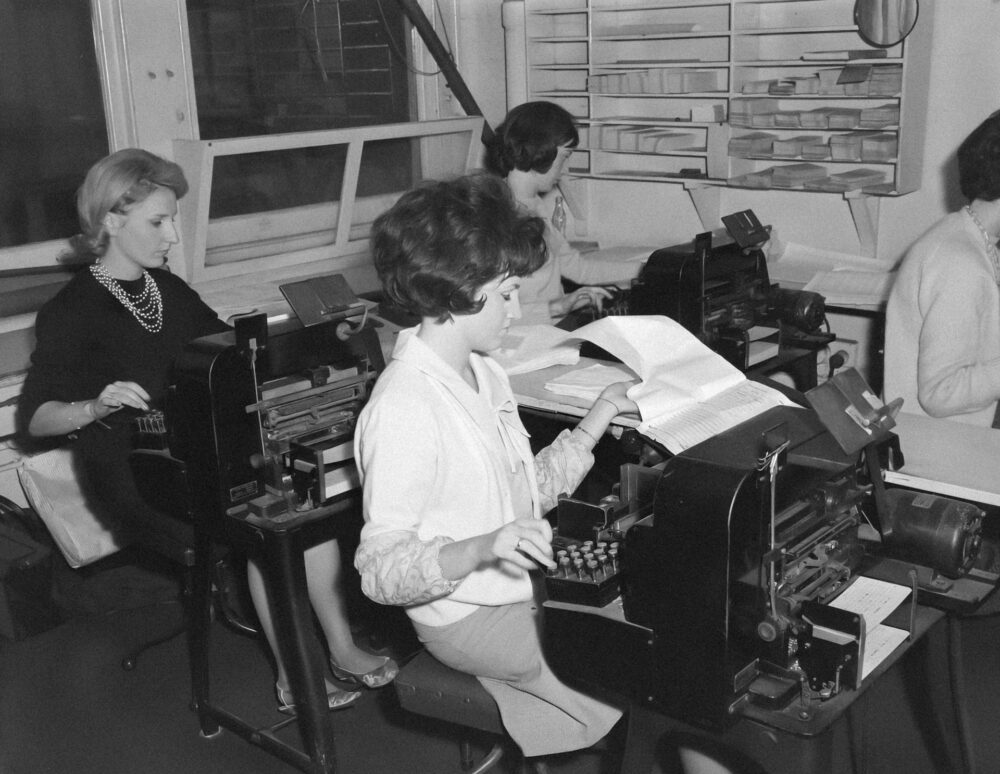
There are plenty of old ways of making money that once built entire careers and now sound almost absurd. Milk delivery. Door to door encyclopedia sales. Renting out VHS tapes. These weren’t fringe side hustles. They were mainstream, dependable ways to earn a living, often for decades at a stretch.
Then technology, changing habits, or a single disruptive invention quietly pulled the floor out from under them. Here’s a look back at some of the most notable ways people used to make money, and what replaced them.
RELATED: Old-School Household Tricks That Still Work Today
1. Home Milk Delivery
Before refrigeration was standard in every kitchen, a milkman dropping off glass bottles on your doorstep every morning was just how dairy worked. Entire local economies were built around delivery routes, bottle returns, and the trust that came with a familiar face at your door.
Refrigerators, supermarkets, and long shelf life dairy packaging ended this almost entirely by the 1970s. A few boutique dairies have revived the concept as a novelty, but it’s nothing like the industry it once was.
2. Door to Door Encyclopedia Sales
Selling encyclopedia sets used to be a legitimate, well paying career. Companies like World Book and Encyclopedia Britannica employed armies of door to door salespeople who could earn a solid middle class living convincing parents that a 20 volume set was an investment in their kids’ future.
The internet made this archaic almost overnight. Why buy a set of books that starts going out of date the day it’s printed when you have instant, constantly updated information online.
3. Video and DVD Rental Clerks
Blockbuster alone once employed close to 60,000 people. Renting movies was a whole cultural ritual, complete with late fees, browsing the new release wall, and arguing with your family about what to watch.
Streaming killed the rental model almost completely. A handful of independent video stores survive as curated, nostalgic experiences, but the industry that once supported tens of thousands of jobs is gone.
4. Telephone Switchboard Operators
Every phone call used to require a human operator physically connecting your line to the one you were calling. It was a huge employer of women in the early to mid 20th century, and for a while it was considered a respectable, technical job.
Automated switching systems phased this out gradually from the 1920s through the 1980s, depending on the region.
Related Stories


5. Typewriter Repair Technicians
As recently as the 1980s, a skilled typewriter repair technician could run a profitable small business servicing offices, schools, and law firms. Every typewriter eventually needed new ribbons, alignment work, or key repairs.
Word processors and then personal computers made typewriters outdated for most everyday use, and the repair trade shrank along with them. A small number of specialists still work on vintage machines for collectors.
6. Film Processing and Photo Developing
One hour photo labs used to be everywhere, in drugstores, malls, and standalone shops. Developing film was a real business, and a whole ecosystem of photofinishing equipment, chemicals, and expertise supported it.
Digital cameras and then smartphones made physical film nearly obsolete for casual photography. Some labs survive serving professional and hobbyist film photographers, but the mass market business disappeared.
7. Traditional Travel Agents
For most of the 20th century, booking a flight or a vacation package meant calling or visiting a travel agent. They had access to information and booking systems that ordinary people didn’t, and that gatekeeping made the job valuable.
Online booking sites gave consumers direct access to the same flights and hotels, cutting out the need for a middleman for most simple trips. Travel agents haven’t vanished, but the job has narrowed to complex or luxury travel where expertise still adds real value.
RELATED: Road Trip Essentials: Everything You Need Before You Hit the Highway
8. Record Store Clerks

Independent and chain record stores once employed people whose entire job was music knowledge, helping customers find new artists, ordering imports, and running the counter. It was a genuine career path for a lot of music fans.
Digital downloads and then streaming services moved music consumption almost entirely online. Vinyl has seen a real resurgence, and some record stores are thriving again, but the scale of the old industry is far smaller.
RELATED: What to Look for in a Vintage Band Tee When Thrifting for Resale
9. Elevator Operators
Early elevators required a trained operator to run the controls and stop the car level with each floor. It was considered a real job, with uniforms and set positions in office buildings and department stores.
Automatic elevators with push button floor selection eliminated the need for a human operator by the mid 20th century. A few remain in historic or luxury buildings purely for atmosphere.
10. Lamplighters
Before electric streetlights, cities employed lamplighters to manually light and extinguish gas street lamps every day, walking set routes at dawn and dusk.
Electric lighting with automatic timers made the job unnecessary by the early 1900s. It’s one of the older entries on this list, but a good reminder that this pattern of jobs disappearing to new technology is nothing new.
RELATED: How to Cut Down Your Electric Bill During the Cold Months
11. Ice Delivery
Before home refrigerators, iceboxes needed regular deliveries of ice blocks to keep food cold. Ice delivery routes were common in cities well into the 1940s.
Electric refrigeration made the icebox, and the delivery job that supported it, bygone within a generation.
12. Newspaper Delivery Routes
Paper routes used to be one of the first jobs available to teenagers, and for adults, running multiple routes could be a real income source. Physical newspaper subscriptions supported a massive daily delivery infrastructure.
Declining print circulation and the shift to digital news has shrunk this dramatically. Some routes still exist, but nowhere near the scale of a few decades ago.
13. Court Stenographers Using Shorthand Machines Alone
Stenography itself hasn’t disappeared, but the traditional path of learning shorthand and working exclusively with a stenotype machine has narrowed. Digital voice recognition and recording technology now handle a lot of transcription work that used to require a dedicated human in the room.
14. Switchboard Style Secretarial Pools
Large companies used to employ pools of secretaries whose main job was managing calls, typing correspondence, and routing messages by hand. Direct dial phones, email, and personal computers redistributed those tasks to individual employees instead of a dedicated pool.
15. Door to Door Vacuum and Appliance Sales
Selling vacuums, encyclopedias, and small appliances door to door was once a legitimate full time sales career, complete with training programs and commission structures.
Big box retail, online shopping, and changing attitudes toward unsolicited home visits made this sales model far less viable, though a few companies still use it in limited form.


