
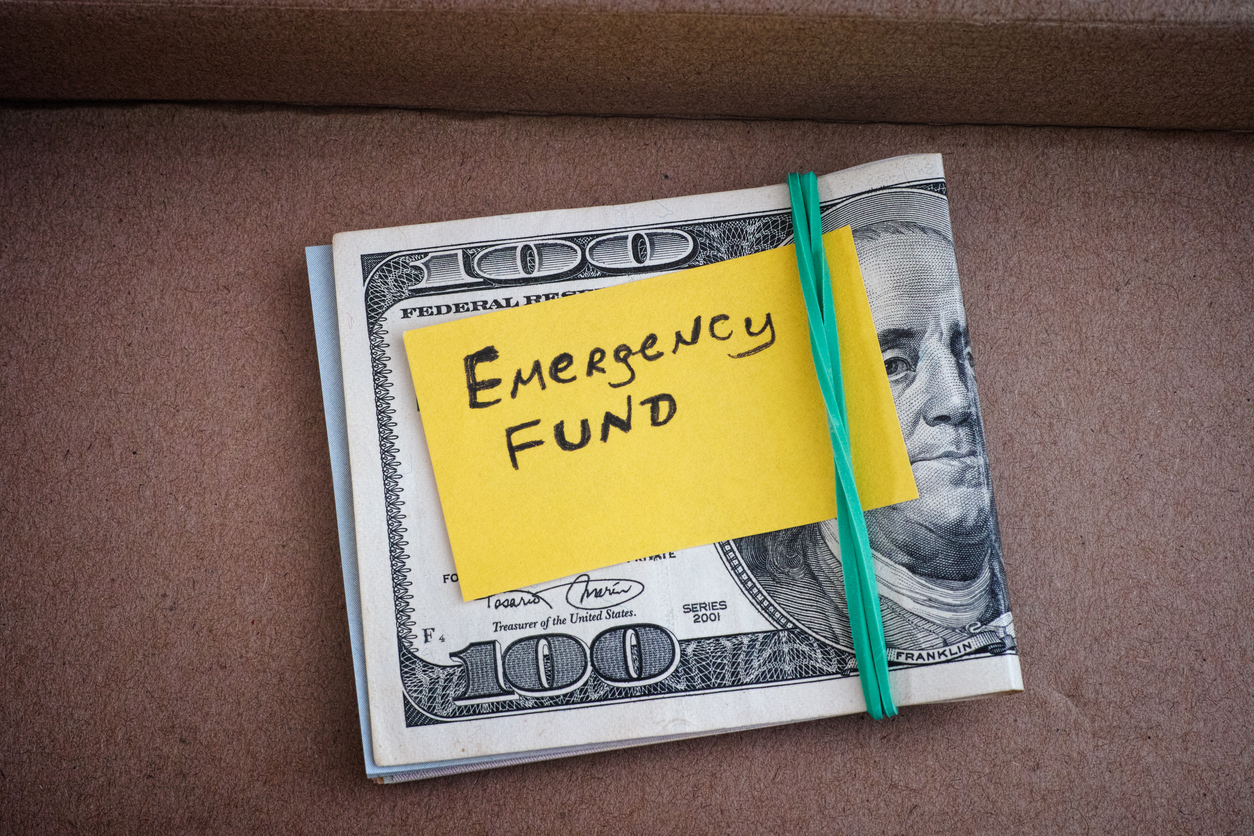
An emergency fund is one of the most important financial safety nets you can build. Whether it is an unexpected medical bill, a sudden job loss, or a car repair that cannot wait, having cash set aside means you can handle life’s curveballs without going into debt. Financial experts generally recommend saving three to six months of living expenses, but getting there can feel overwhelming when you are living paycheck to paycheck.
The good news is that building an emergency fund does not require a high income or a dramatic lifestyle overhaul. It requires a strategy and a little consistency. Here are seven practical ways to save an emergency fund, no matter where you are starting from.
KEY POINTS
- Even saving $25 per paycheck automatically builds a meaningful emergency fund over time without requiring willpower.
- A separate high-yield savings account keeps your emergency fund accessible but protected from everyday spending temptation.
- Windfalls and small side income streams, directed straight to savings, can cut your timeline dramatically.
01
of 07
Start Smaller Than You Think You Should
One of the biggest mistakes people make when trying to build an emergency fund is setting an intimidating goal right out of the gate. If you tell yourself you need $15,000 in savings and you currently have $200, the goal feels impossible. That feeling of impossibility is what causes most people to give up before they start.
Instead, set a micro-goal first. Aim for $500 or $1,000. That amount alone is enough to cover a minor car repair, a co-pay, or a utility bill in a rough month. Once you hit that target, set the next milestone. Progress builds momentum, and momentum builds habits.
The psychological win of reaching a small goal is more powerful than most people realize. It turns saving from something you dread into something that feels achievable.
02
of 07
Open a Separate High-Yield Savings Account
Where you keep your emergency fund matters almost as much as how much you save. Keeping it in your regular checking account makes it too easy to spend, and keeping it in a traditional savings account means you are earning almost nothing on your balance.
A high-yield savings account solves both problems. These accounts, offered by many online banks, typically offer interest rates significantly higher than traditional banks. Your money is still accessible when you need it, but it is separated from your everyday spending, which reduces the temptation to dip into it.
Look for an account with no monthly fees, no minimum balance requirements, and FDIC insurance. Setting up this account is usually free and takes less than 10 minutes.
03
of 07
Automate Your Savings
If you wait until the end of the month to save whatever is left over, there will rarely be anything left over. The most reliable way to build an emergency fund is to automate the process so the decision is made for you.
Set up an automatic transfer from your checking account to your emergency fund savings account on the same day you get paid. Even if it is only $25 or $50 per paycheck, you will be building your fund without thinking about it. Over time, small amounts add up quickly.
Automation removes willpower from the equation. You cannot spend money that has already been moved into savings before you even see it. Most banks and budgeting apps allow you to set this up in minutes.
04
of 07
Use Windfalls Wisely
Tax refunds, work bonuses, birthday money, freelance income, and other unexpected cash are perfect opportunities to give your emergency fund a major boost. Rather than treating these windfalls as spending money, commit to putting at least half directly into savings.
This does not mean you can never treat yourself. If you receive a $1,200 tax refund, putting $800 into your emergency fund and using $400 for something enjoyable is still a win. The key is being intentional rather than letting the money disappear into everyday expenses before you realize it is gone.
Windfalls are irregular by nature, which means they will not always be there. Capturing them when they appear can shave months or even years off the time it takes to fully fund your emergency savings.
05
of 07
Create a Small Side Income Stream

If your current income does not leave much room for saving, adding even a modest side income can accelerate your emergency fund significantly. The gig economy has made it easier than ever to earn extra money on a flexible schedule.
Options range from driving for a rideshare service or delivering food to selling items you no longer need online, doing freelance work in your area of expertise, or offering services like pet sitting, cleaning, or tutoring in your local area. You do not need to commit to a second job. A few hours a week devoted entirely to building your emergency fund can produce hundreds of dollars a month.
The key is to treat side income as savings income only. When it hits your account, move it immediately to your emergency fund before you have a chance to absorb it into your regular spending.
06
of 07
Cut One Recurring Expense and Redirect It
You do not need to slash your entire budget to find emergency fund money. In most households, there is at least one recurring expense that could be reduced or eliminated without significantly affecting quality of life.
Look at your monthly subscriptions, memberships, and recurring charges. Are you paying for a streaming service you rarely use? A gym membership you stopped going to? A subscription box that seemed exciting three months ago but has since lost its appeal?
Canceling or pausing even one of these and redirecting that amount to your emergency fund can make a meaningful difference over time. $15 a month does not sound like much, but over two years, that is $360 you did not have before. Stack a few of these redirects together and the impact grows substantially.
07
of 07
Track Your Progress Visually
Saving money is a long game, and long games are easier to stay committed to when you can see how far you have come. Tracking your emergency fund progress visually is a simple but powerful motivator.
You can do this in a notebook, on a printed savings thermometer you color in over time, in a spreadsheet, or in a budgeting app. The format does not matter as much as the habit of checking in regularly and acknowledging the growth you are making.
When you can see your balance climbing, even slowly, it reinforces that your efforts are working. It also gives you a clear picture of how far you are from your goal, which helps you stay focused and make better spending decisions in the moment.


