
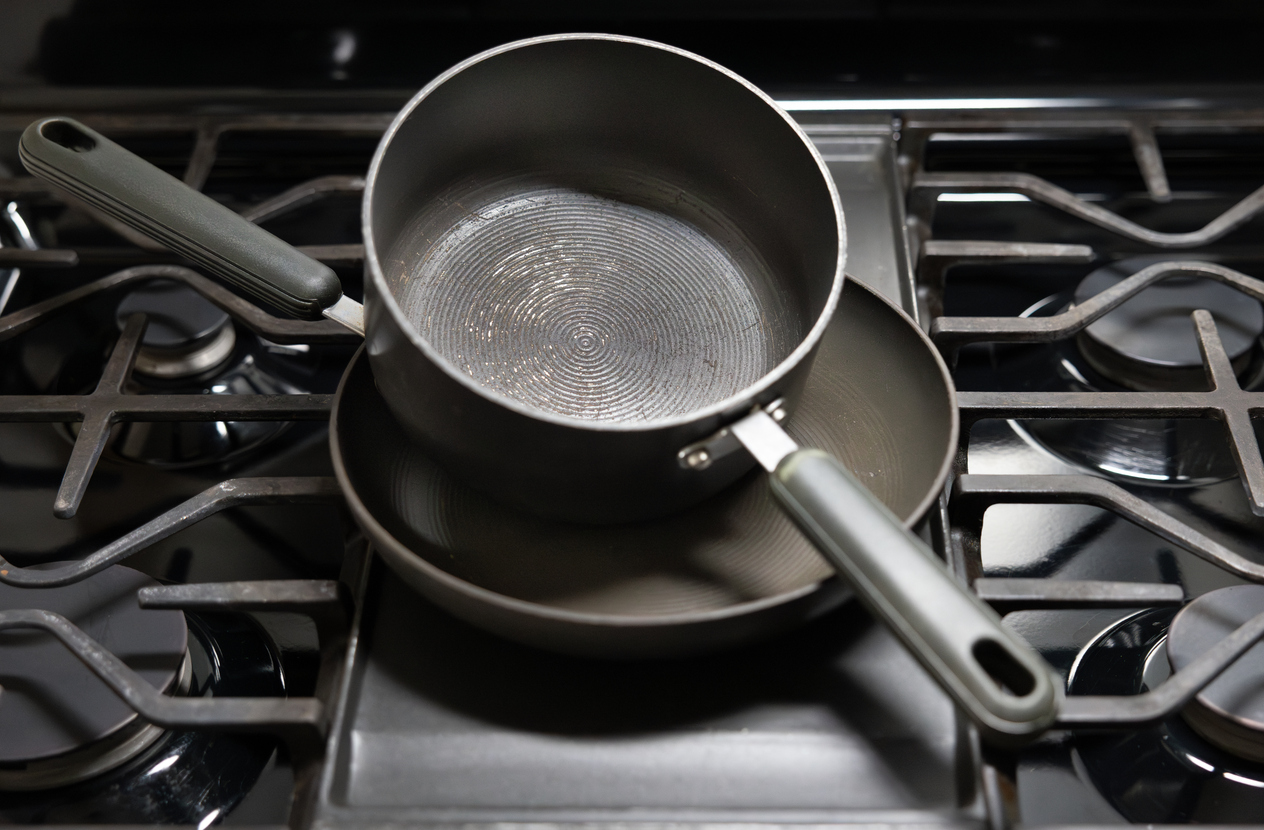
KEY POINTS
- Non-stick pans typically last 3 to 5 years, but how they’re used and cared for can shorten or extend that window significantly.
- Flaking, scratching, warping, and food sticking despite oil are all clear signs the coating has broken down.
- A rough or gritty texture across the cooking surface, even after washing, is another clear sign the coating has worn through.
A non-stick pan is one of those kitchen tools you use without thinking twice, right up until the morning your eggs start sticking anyway. That moment usually means one thing: the coating has broken down, and no amount of extra oil or butter is going to fix it.
Here’s how to know when your pan has actually reached the end of its life, why it happens, and how to get more years out of the next one you buy.
RELATED: 20 Household Items You’re Throwing Away Too Soon
Why Non-Stick Coatings Wear Out
Most non-stick pans are coated with a thin layer of material, often PTFE or a ceramic-based alternative, that creates a slick surface food can’t grip onto. That layer is durable, but it’s not permanent. Heat, metal utensils, abrasive scrubbing, and stacking pans without protection all wear it down over time. Once the coating thins out or scratches through, the pan loses the very thing that made it non-stick in the first place.
On average, a non-stick pan holds up for 3 to 5 years with regular use. Pans that get daily use, high heat, or rough handling tend to wear out sooner. Pans used occasionally and cared for properly can last longer than that.
6 Signs It’s Time to Replace Your Pan
01
of 06
Food sticks even with oil or butter
This is the clearest sign. If eggs, pancakes, or fish start sticking despite using plenty of fat, the coating has broken down to the point where it’s no longer doing its job.
02
of 06
The coating is visibly flaking or peeling
Small chips or flakes coming off the surface, especially into your food, mean the pan needs to be replaced right away. Ingesting flaking coating isn’t something you want to risk regularly.
03
of 06
There are deep scratches across the surface
Light surface marks are normal, but deep scratches that go through the coating to the metal underneath mean the non-stick layer is compromised in that spot, even if the rest of the pan still looks fine.
04
of 06
The Pan is Warped
If the pan no longer sits flat on the stove or wobbles when you set it down, sudden temperature changes have likely warped the base. A warped pan heats unevenly, which makes cooking less predictable and can accelerate further damage to the coating.
05
of 06
Discoloration that won’t come off
Some staining is normal and harmless, but a coating that’s turned a dull, uneven, or dark color no matter how it’s cleaned is often a sign of overheating damage.
06
of 06
It’s simply been years
Even a pan that looks fine on the surface can be past its useful life if it’s seen daily use for 5 or more years. If performance has quietly declined and you can’t remember the last time it worked as well as it used to, it’s worth a replacement.

