
KEY POINTS
- Research before you go because knowing specific names, tags, and markers lets you spot value instantly instead of guessing in the aisle.
- Specialize first by picking one category, learning it deeply, and ignoring everything else until that section feels like second nature.
- Condition is everything, so always assess the state of a piece before you commit because a rare find in poor shape is often no find at all.
Most people walk through a thrift store the same way every time. They head straight for the clothing racks, flip through a few jackets, maybe pause at the book section, and leave with a paperback and a vague sense that nothing good was there today. What they miss, aisle after aisle and visit after visit, is a rotating inventory of items that experienced resellers are quietly pulling off shelves and flipping for two, five, sometimes ten times what they paid.
The secret is not insider knowledge or special access. It is knowing what to look for and training your eye to stop on things that most shoppers walk right past. Here are the categories that consistently fly under the radar and consistently deliver strong resale returns.
Vintage Pyrex and Milk Glass
The kitchenware aisle is one of the most underestimated sections in any thrift store. Shoppers tend to dismiss it as a graveyard of mismatched mugs and donated crockpots. But buried in those shelves, often priced at a dollar or two, is vintage PYREX that collectors will pay serious money for.
PYREX produced between the 1950s and 1980s came in bold, graphic patterns that are genuinely hard to find today. Patterns like Gooseberry, Butterfly Gold, and the pink Daisy set consistently sell on eBay and Etsy for $30 to well over $100 per piece, depending on the pattern and condition. Milk glass pieces, especially those from Anchor Hocking and Fenton, follow the same logic. They look plain and dated to most eyes, which is exactly why they keep showing up underpriced.
The key is learning the most sought-after patterns before you go. Spend an hour on eBay looking at completed sales and you will walk into the kitchenware aisle with a completely different set of eyes.
Wool and Cashmere Clothing
Most thrift store shoppers buy clothes based on brand recognition. They know to grab a Ralph Lauren polo or a Patagonia fleece. What they consistently skip is anything that looks a little grandmotherly, a little boxy, or simply unlabeled.
This is a mistake. Wool and cashmere garments, regardless of brand, hold real resale value. A plain cashmere sweater with no notable label will still sell for $40 to $80 on Poshmark or ThredUp simply because cashmere is cashmere. The same goes for heavy wool coats, wool blazers, and wool trousers. These items are often passed up because they look old-fashioned on a hanger. They clean up beautifully and sell fast to buyers who know what they are looking for.
Check every tag. If the fabric content says 100% cashmere, 100% wool, or a high-percentage blend, pull it out and look it over. A small snag or a missing button is not a dealbreaker when the material itself commands attention.

Board Games with All Their Pieces
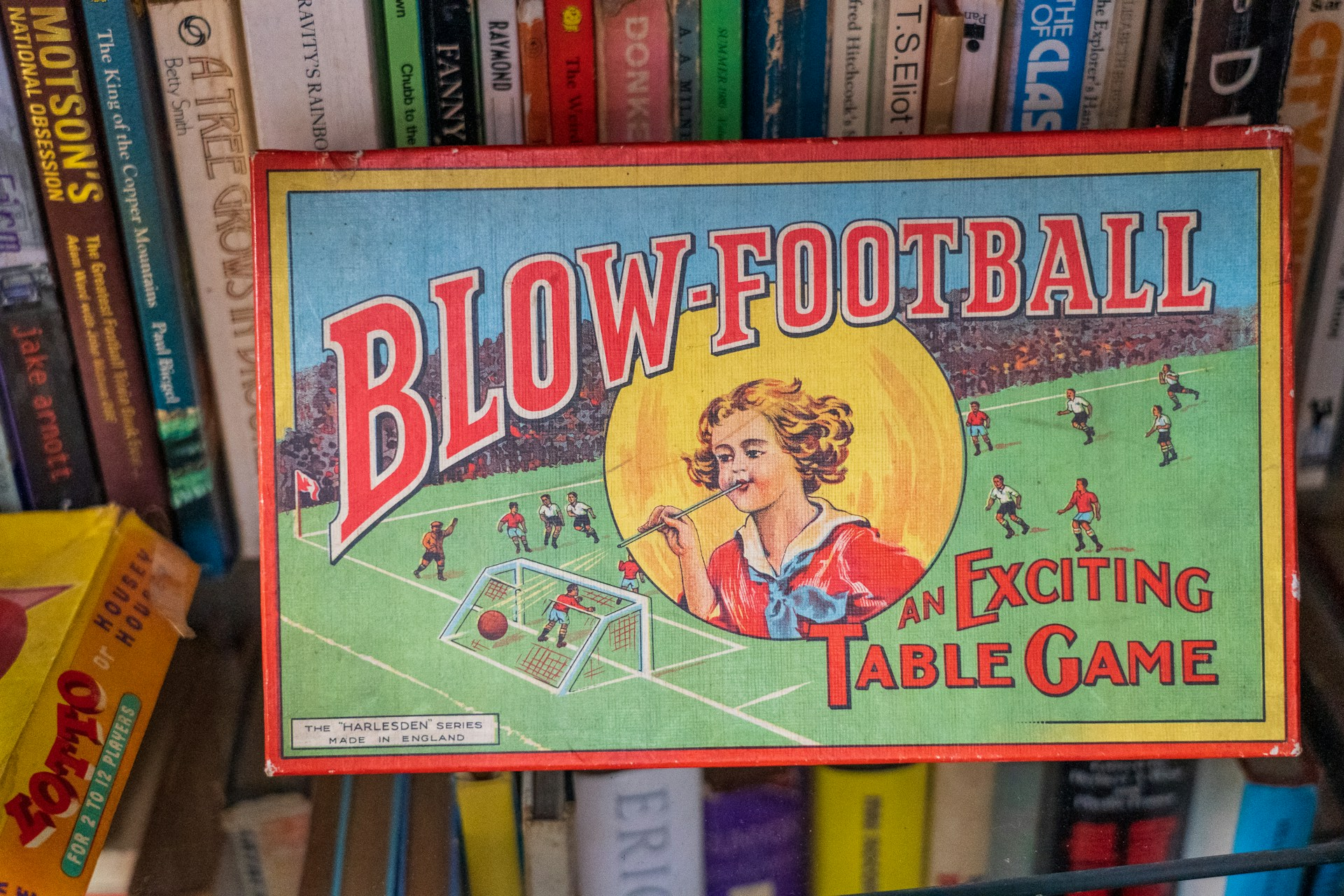
This one surprises a lot of people. Thrift stores are full of board games, and most shoppers either ignore them entirely or assume they are missing pieces. The reason resellers love them is exactly because of that assumption.
Vintage and discontinued board games in complete condition sell extremely well online. Games from the 1960s through the 1990s that are no longer in print regularly fetch $30 to $150 or more, particularly when the box is in decent shape and all pieces are accounted for. Games like Fireball Island, Omega Virus, Dark Tower, and many lesser-known titles have passionate collector communities willing to pay premium prices.
The move is to spend two minutes checking the piece count against the inside of the box lid, which usually lists what should be included. A complete game priced at $3 is one of the better finds you can make in a thrift store.
Hardcover Books, Specifically First Editions and Niche Subjects
The book section is where optimism goes to die for most thrift shoppers. It feels overwhelming, mostly full of mass-market paperbacks and outdated self-help books. Resellers who learn to read spines quickly, however, consistently find profitable titles.
First edition hardcovers are the obvious prize, but they require some research to spot. More reliably profitable are books on niche technical subjects: old computer manuals for vintage systems, out-of-print field guides, regional cookbooks, and foreign language editions of classic texts. Certain religious texts, philosophical works, and esoteric subjects also have dedicated buyer communities that pay well for physical copies.
A free app like BookScouter lets you scan a barcode in seconds and see the current buyback and resale value. Spend ten minutes in the book section with that app and you will cover a lot of ground fast.
Fishing and Hunting Equipment
Sporting goods sections at thrift stores are almost always overlooked. They tend to be disorganized, and the equipment can look dingy or worn in ways that make shoppers assume it is not worth much. In reality, fishing and hunting gear holds its value well and has a dedicated resale market.
Vintage fishing lures are a standout. Certain old lures, especially wooden ones or those made by discontinued manufacturers, are actively collected and sell for $20 to $200 each on eBay. Even functional but discontinued modern lures have buyers who stock up when they find them cheaply. Hunting gear, especially older optics like rifle scopes, binoculars, and rangefinders from reputable brands, consistently resells well when sourced cheaply.
The key here is knowing a few brand names and lure types before you go. A little preparation turns a confusing pile of old equipment into a recognizable opportunity.
Bar and Restaurant Ware
Heavy, restaurant-grade ceramic dishes, commercial mixing bowls, and institutional barware get donated regularly and go almost completely unnoticed. Home cooks and small restaurant owners actively seek out this type of item, and it sells well on Facebook Marketplace and OfferUp in particular.
Pieces stamped with old hotel names, regional diners, or defunct restaurant chains carry additional collector value. A set of heavy diner mugs stamped with a local chain name from the 1970s is worth far more than it appears to be sitting in a bin.
Silver-Plated and Sterling Flatware
The jewelry case gets attention, but flatware drawers rarely do. Silver-plated flatware sells slowly and is worth less than sterling, but actual sterling silver flatware, typically marked 925 or Sterling, can be melted or resold for its metal value alone at a meaningful markup over thrift store prices.
Even silver-plated sets in good condition sell well when marketed to buyers who want a complete, matching set for entertaining. The market for this is quieter than it used to be, which means prices at the thrift store have not caught up to what these pieces still bring online.
Vintage Spatulas and Kitchen Utensils
This is one of the strangest and most consistently profitable niches in thrift store reselling, and it works precisely because it sounds absurd. Nobody thinks twice about a bin of old spatulas. That invisibility is the entire point.
Vintage kitchen utensils, particularly spatulas, turners, and servers made from the 1930s through the 1970s, have a dedicated collector base that most people do not know exists. The most sought-after pieces are those with colorful Bakelite or catalin handles in red, green, yellow, and marbled patterns. Bakelite was a early plastic used heavily in mid-century kitchen tools, and its rich, warm appearance has made it genuinely collectible. A single Bakelite-handled spatula in good condition can sell for $15 to $60 on Etsy or eBay. A matching set in multiple colors can bring considerably more.
Beyond Bakelite, look for utensils with unusual construction: slotted turners with decorative cutout patterns, egg servers with intricate piercing, and any piece stamped with an American manufacturer name like Androck, Ekco, or A&J. These brands produced kitchen tools from the 1920s through the 1960s that are now pulled specifically by collectors who recognize the names.
The test for Bakelite is simple and takes about five seconds. Run the piece under hot water for a moment and then smell the handle. Genuine Bakelite gives off a faint, distinctive formaldehyde smell that synthetic plastics do not produce. If you catch that smell, you are likely holding something worth far more than the fifty cents the thrift store is asking.
The utensil bin is one of the last places in a thrift store where prices have not caught up to actual demand. Most stores price these pieces by feel, which means a genuinely collectible spatula sits next to a worthless modern one at the same dollar-bin price. Learning to tell them apart takes one afternoon of research and pays off every single visit.
Vintage Band T-Shirts
Few thrift store finds have a higher ceiling than a genuine vintage band tee, and few are passed up more consistently by shoppers who do not know what they are looking at. A faded, cracked-print shirt hanging on a rack with no obvious brand name looks like a candidate for the rag bin. To the right buyer, it can be worth hundreds of dollars.
The market for vintage band shirts, particularly those from the 1970s through the 1990s, has grown significantly as streetwear culture and nostalgia have converged. Original tour shirts from that era for artists like The Rolling Stones, Led Zeppelin, Metallica, Nirvana, and Iron Maiden regularly sell on Depop, eBay, and Grailed for $100 to $500 or more depending on the band, the tour, and the condition of the print. Rarer artists and more obscure tours can go even higher when the right collector finds the listing.
Authenticity is everything in this category, and it is also what makes the thrift store the best place to source these shirts. Reproductions flood the retail market, but thrift stores receive genuine donations from people who actually wore these shirts to actual concerts decades ago and simply forgot what they had.
A few markers separate originals from fakes. The tag is your first stop. Shirts from the 1980s and early 1990s will have tags from labels like Screen Stars, Hanes Beefy-T, or Fruit of the Loom, and will feature single-stitch construction on the sleeves, meaning the hem is folded and sewn once rather than twice. Single-stitch construction largely disappeared from mass manufacturing by the mid-1990s, making it one of the most reliable indicators of age. The print itself on an original will show natural fading, cracking, and wear consistent with age rather than the artificial distressing added to modern reproductions.
Do not limit your search to the most famous band names. Shirts from regional acts, short-lived groups, and forgotten 1980s metal or punk bands also have collector communities and can be surprisingly valuable precisely because they are so scarce. When in doubt, photograph the tag and print and run a quick search before passing it up.
