
KEY POINTS
- Vintage fishing lures from makers like Heddon, Pflueger, and Creek Chub are overlooked by most thrift shoppers but carry serious collector demand and strong resale margins on platforms like eBay.
- Knowing what to look for, including glass eyes, original hardware, rare color patterns, and original boxes, is the knowledge edge that separates profitable finds from worthless junk.
- Researching sold listings before pricing and photographing every angle of a lure builds the credibility and accuracy needed to attract serious collectors willing to pay fair market value.
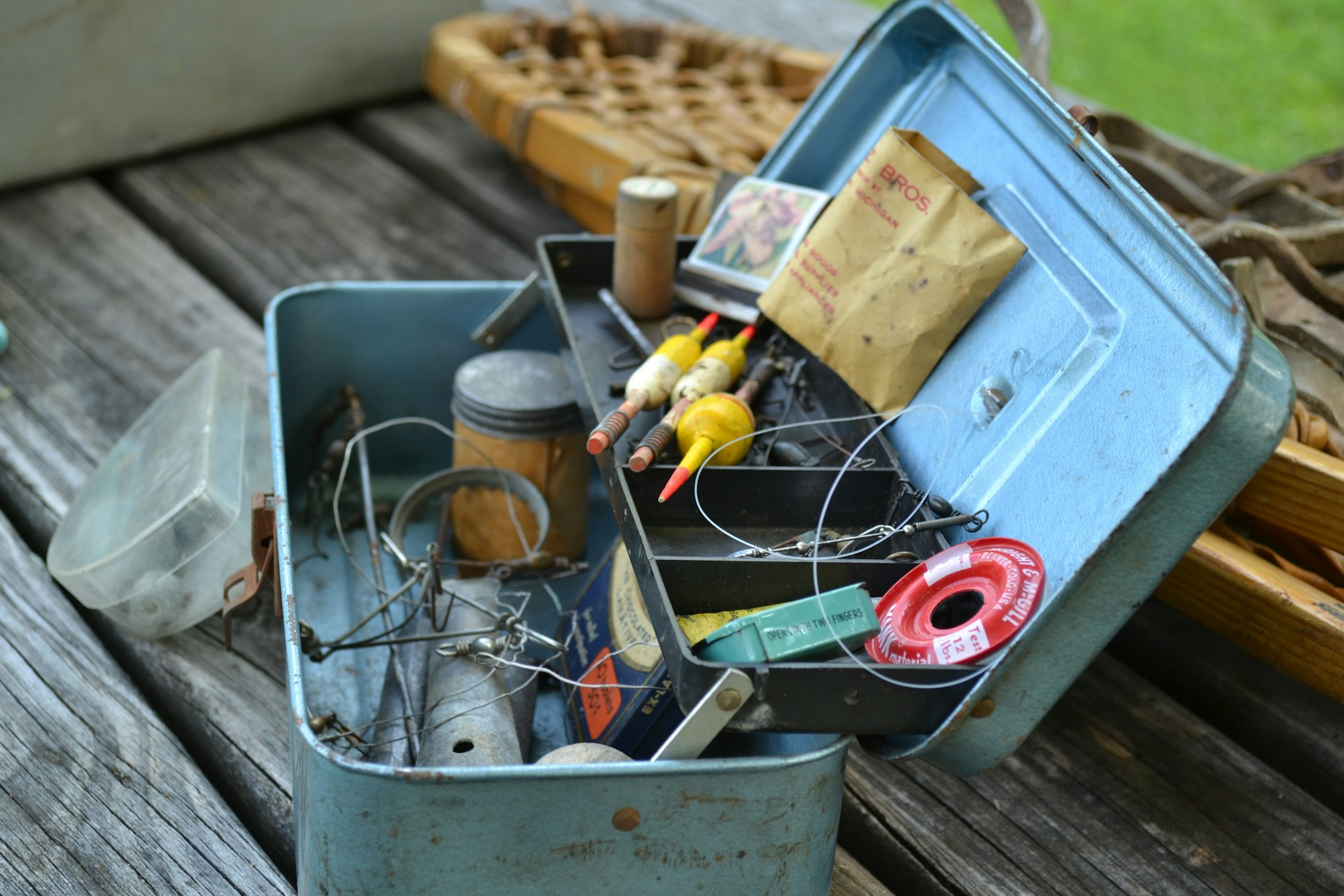
Most people walk right past the fishing gear at Goodwill. A tangled mess of hooks and line dumped into a bin does not exactly scream opportunity. But if you know what you are looking for, those bins can be some of the most profitable stops in any thrift store. Vintage and collectible fishing lures sell consistently on eBay and Etsy, and the margin between what people pay at a thrift store and what buyers will spend online is often dramatic. The key is knowing which brands matter.
This guide breaks down the lure brands and makers that are worth picking up whenever you spot them, whether you are at a Goodwill, an estate sale, a flea market, or a church rummage sale.
Why Fishing Lures Are a Sleeper Category
Fishing lures have a passionate collector base that most casual thrifters know nothing about. Collectors chase vintage American-made lures the same way others chase vintage sneakers or mid-century ceramics. Condition, color, original hardware, and whether the box is included all affect value. Some lures that cost a dollar or two to produce in the 1950s now sell for hundreds. Even mid-tier brands from the 1970s and 1980s regularly fetch $15 to $50 per lure if they are in good shape.
The brands below represent a range of value tiers, from entry-level flips to genuine vintage finds.
Creek Chub Bait Company
Creek Chub is one of the holy grail names in lure collecting. Founded in Garrett, Indiana in 1906, the company produced hand-painted wooden lures for decades before eventually closing. Their lures are known for exceptional craftsmanship and a wide variety of colors called “finishes” by collectors.
Common Creek Chub models to watch for include the Pikie, the Darter, the Injured Minnow, and the Wiggler. A Pikie in good condition with original glass eyes can sell for $30 to $150 depending on the finish. Rare finishes or early glass-eyed examples can push well past that. If you see a wooden lure with “CCBCO” or “Creek Chub” stamped or labeled anywhere, pick it up without hesitation.
Heddon
Heddon is another legendary American brand with deep roots in Dowagiac, Michigan. Founded in the late 1800s, Heddon produced some of the most iconic lures in fishing history. The brand still exists today under a different parent company, but it is the vintage pre-1970s Heddon lures that collectors want.
Look for models like the Vamp, the Zara Spook, the River Runt, the Lucky 13, and the Crazy Crawler. Older Heddon lures made from wood and featuring glass eyes or early plastic construction are the most desirable. A vintage wooden Heddon Vamp in a rare color can bring $75 or more. Even later plastic versions of the Zara Spook sell reliably in the $10 to $30 range, making them an easy flip whenever you find them.
Arbogast
Arbogast is best known for the Jitterbug, one of the most recognizable topwater lures ever made. The company out of Akron, Ohio has been producing lures since the 1930s, and while the Jitterbug is still manufactured today, the older versions are the ones that move fast online.
Vintage Arbogast lures, especially early Jitterbugs with two-piece lips and original color finishes, are reliable sellers. Even modern Jitterbugs in discontinued colors or unusual sizes sell well because bass fishermen actually use them. The Hula Popper is another Arbogast model worth grabbing. Expect $10 to $40 for most vintage Arbogast finds, with exceptional examples going higher.

South Bend Bait Company
South Bend was one of the major American lure manufacturers of the early 20th century and produced a massive catalog of wooden and early plastic lures. Common models include the Bass-Oreno, the Surf-Oreno, and the Trout-Oreno. The “Oreno” family of lures is immediately recognizable by its oval body shape and distinctive hardware.
South Bend lures are generally more accessible price-wise than Creek Chub or Heddon, which actually makes them great for beginner resellers. You can often buy them cheap, sell them for $15 to $50, and build your knowledge of the category at the same time. Boxed sets or lures with original South Bend packaging are worth significantly more.
Rapala
Rapala is a Finnish brand that became a phenomenon in the American fishing world starting in the 1960s after a famous Sports Illustrated article sent demand through the roof. Original Rapala lures from the 1960s and early 1970s, particularly those made in Finland from balsa wood, are legitimate collectibles.
The easiest way to identify an early Rapala is to look for “Made in Finland” on the lure or packaging. Later lures made in other countries are worth far less. Early Finnish-made Rapalas in original condition sell in the $20 to $100 range depending on model and color. Even some mid-period Rapalas in hard-to-find colors sell well to anglers who want to use them.
Paw Paw Bait Company
Paw Paw is a name that a lot of casual thrifters miss entirely, but collectors know it well. Based in Paw Paw, Michigan, the company made wooden lures from around 1910 through the mid-20th century. Their lures are often found in rougher condition than Creek Chub or Heddon pieces, but strong examples still command solid prices.
Paw Paw made a wide range of baits including surface lures, diving lures, and musky-sized versions of popular styles. Musky lures from any vintage manufacturer tend to be worth more simply because they are larger and rarer. A Paw Paw musky bait in decent condition can sell for $40 to $100 or more.
Bomber Bait Company
Bomber lures from Gainesville, Texas are workhorses of mid-century American fishing and have a dedicated following among both collectors and working anglers. The original wood Bombers from the 1940s and 1950s are the most valuable, but even later plastic versions in good condition move well online.
Bomber is a great brand to watch for at estate sales in the South, where the brand has especially deep roots. Tackle boxes from Texas, Louisiana, and Alabama often turn up Bomber lures that sell instantly to regional collectors and fishermen.
