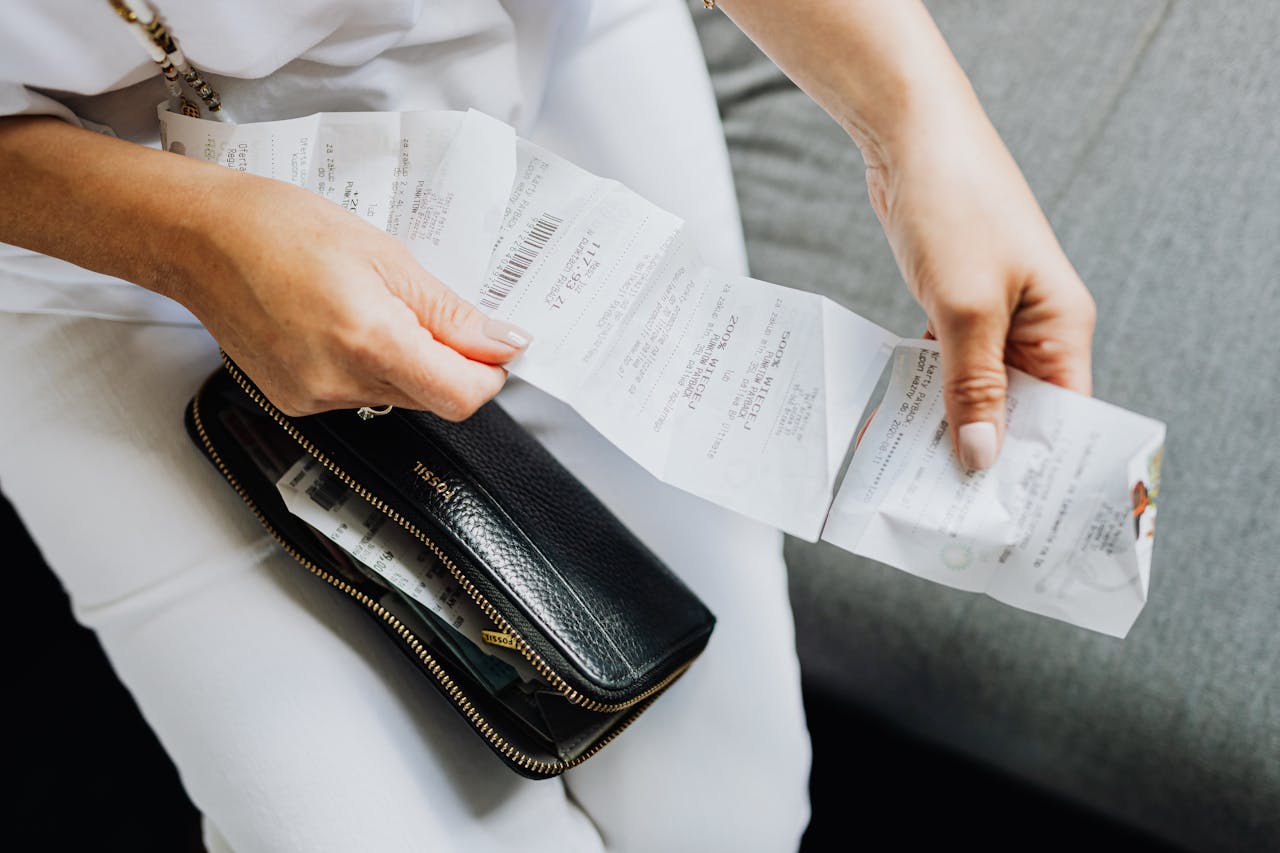

A few years ago, I stood in the checkout line at my local grocery store, watching the total tick past $175 — for the third time that month. My cart was full. My fridge at home was also full. And somehow, we were still ordering takeout twice a week because “there’s nothing to eat.” Mind you this was for two people.
I was hemorrhaging money on food, and it wasn’t a “I need to expand my food budget” issue.
Fast forward to today: my monthly grocery bill for the same two-person household sits comfortably between $300 and $400. I cut our spending significantly — and we eat better now. More variety, less waste, and I actually enjoy cooking again.
Here’s exactly how I did it.
First, I Had to Confront the Real Problem
Most people think their grocery bill is high because food is expensive. And yes, prices have gone up. But when I actually tracked where my money was going, I found the real culprits:
- Food waste. Nearly 30–40% of the food I bought was ending up in the trash. Half-used produce, forgotten leftovers, ingredients bought for one recipe and never touched again.
- Impulse buys. Shopping without a list meant my cart filled up with things I didn’t need.
- Convenience tax. Pre-cut vegetables, individual snack packs, marinated meats — I was paying 2–3x the price for someone else’s 10 minutes of prep work.
- No meal plan. Without a plan, I’d buy vaguely and cook randomly, which meant ingredients didn’t stretch across multiple meals.
Once I saw the problem clearly, the solutions became obvious.
The Changes That Made the Biggest Difference
1. Meal Planning
I used to buy random food items at the store without real thought if they could make up a meal. It usually was based on one person’s craving rather than a carved out meal plan.
Real meal planning means sitting down once a week, deciding about what you’ll eat for every dinner (and ideally lunches), and building your grocery list from that. Not the other way around.
The key shift for me was planning meals that share ingredients. If I’m making a stir-fry on Tuesday with half a head of cabbage, I’ll plan a slaw or soup for Thursday to use the rest. If I roast a chicken on Sunday, the carcass becomes broth on Monday and the leftover meat goes into tacos on Wednesday.
This kind of intentional overlap eliminated nearly all of my food waste.
Try this: Plan 4–5 dinners per week (not 7 — you’ll have leftovers and a flexible night). Write your list from the plan. Buy nothing that isn’t on the list.
2. Embracing the “Cheap” Proteins
Here’s an uncomfortable truth: boneless, skinless chicken breasts are a marketing phenomenon, not a culinary one. They’re expensive, they dry out easily, and they’re frankly less flavorful than cheaper cuts.
Switching to bone-in, skin-on thighs cut my poultry spending by nearly 40%. Eggs became a weekly protein staple. I started cooking dried beans and lentils from scratch instead of buying canned — a bag of dried chickpeas costs about $2 and makes the equivalent of 4–5 cans.
Other budget proteins worth knowing:
- Canned fish (sardines, tuna, salmon) — nutrient-dense and incredibly cheap
- Pork shoulder and pork loin — often half the price of beef
- Whole eggs — one of the best nutrition-per-dollar foods on the planet
- Tofu and tempeh — especially if you buy them at an Asian grocery store
You don’t have to give up meat. You just have to stop buying the most expensive cuts by default.
3. The Freezer Is Your Best Friend
My freezer used to be a graveyard for mystery bags and forgotten ice cream. Now it’s an active part of my kitchen strategy.
When bread is about to go stale, it goes in the freezer. When bananas are overripe, they go in the freezer for smoothies later. When I find a great deal on ground beef or chicken thighs, I buy several pounds, package them out in meal portions and freeze them immediately.
The freezer also lets me cook in bulk without getting bored. I’ll make a big pot of soup or a tray of enchiladas, portion it out, and freeze half. This comes in handy for the nights I don’t feel like cooking or didn’t plan for dinner.
What freezes well: bread, cooked grains, cooked beans & rice, soups, stews, most meats, bananas, berries, citrus zest, fresh herbs (in olive oil in ice cube trays), and most cooked meals.
RELATED: Can I Freeze Rice? Yes! Here Is How
4. Shop at International Markets for Fresh Produce
This is one of the most underrated money-saving moves in the frugal kitchen playbook — and it comes with a bonus: your cooking gets way more interesting.
International grocery stores (Asian, Latin, Middle Eastern, African, Eastern European — whatever is in your area) almost universally sell fresh vegetables and produce at a fraction of what mainstream supermarkets charge. I’m talking 50–70% less in many cases. A bunch of cilantro that costs $1.49 at a chain grocery store might be $0.39 at a local Asian market. Jalapeños, limes, ginger, garlic, cabbage, green onions — the savings stack up fast.
Why the price difference? International markets typically have lower overhead, source more locally or regionally, and cater to communities where fresh produce is bought in larger quantities and expected to be affordable. They’re not marking up a lime to subsidize a loyalty rewards program.
Beyond price, these stores expose you to ingredients that can transform your budget cooking:
- Daikon radish — cheap, versatile, great raw or cooked
- Bitter melon, bok choy, napa cabbage — pennies per pound
- Dried mushrooms — intense flavor at a fraction of fresh prices
- Kabocha squash, yuca, plantains — filling, inexpensive starches beyond the usual potato
- Fresh herbs in bulk — Thai basil, cilantro, mint, for a fraction of supermarket prices
Even if you don’t know how to cook with every ingredient yet, shopping at international markets pushes you to explore — and exploration leads to a wider, cheaper, more flavorful repertoire.
Practical tip: Make one international market your regular produce stop and reserve the mainstream supermarket for packaged goods and anything you can’t find elsewhere. The habit shift alone can save $30–50 a month on produce.
5. Stop Shopping Hungry — And Stop Shopping Often
Every extra trip to the grocery store is an opportunity to spend money you didn’t plan to. I went from shopping 3–4 times a week (grabbing “just a few things”) to one main shop per week with a hard list.
The reduction in impulse purchases was immediate and dramatic.
And yes — never shop hungry. It’s a cliché because it’s true. When I’m hungry, everything looks good, and my cart fills up with snacks and prepared foods I don’t need.
6. Unit Price Is the Only Price That Matters
The sticker price on a product is almost meaningless without context. A $4 jar of peanut butter might be a great deal or a terrible one depending on the size.
Most grocery stores list the unit price on the shelf label (price per ounce, per pound, per 100g). This is the number to compare. In almost every category, the larger size wins — but not always. Sometimes a sale on a smaller size undercuts the bulk option.
This habit takes 5 extra seconds per item. Over a year, it saves hundreds of dollars.
7. Build a “Pantry Brain”
The most expensive way to cook is to shop for individual recipes. The cheapest way is to maintain a well-stocked pantry and shop to replenish it.
My pantry staples — olive oil, canned tomatoes, dried pasta, lentils, rice, oats, vinegars, spices — let me improvise meals from whatever is in the fridge. I rarely need to make a special trip for a single ingredient because I already have the building blocks.
When pantry staples go on sale, I stock up. When they don’t, I just replenish what I’ve used. It’s a slow build, but once it’s in place, it fundamentally changes how you shop and cook.
What I Didn’t Cut
Worth noting: there are a few places I deliberately didn’t cut corners.
- Fresh produce. I still buy good vegetables and seasonal fruit. I just stopped letting them rot.
- A few quality ingredients. Good olive oil, decent cheese, real butter — these make a difference to enjoyment. I just use them deliberately instead of carelessly.
- Foods I genuinely love. Frugality isn’t about suffering. If good coffee matters to you, keep it. Cut somewhere else.
The goal isn’t to eat like you’re broke. It’s to stop spending money on things you don’t actually care about — and redirect it toward things you do.