
Most people assume that cooking interesting food at home requires a packed pantry, specialty ingredients, and hours of planning. The truth is almost the opposite. The cooks who make great food consistently are not the ones with the most ingredients. They are the ones who have learned to do more with less.
The secret is building your kitchen around a small set of truly versatile staples, ingredients that work across cuisines, cooking methods, and meals. Once you understand which five categories of ingredients carry the most weight, you can walk into your kitchen on any given weeknight and put together something genuinely good without a recipe, without a grocery run, and without stress.
KEY POINTS
- Cook your grain in bulk at the start of the week so the longest step in weeknight cooking is already done.
- Always finish your dish with a squeeze of lemon or splash of vinegar, since acid is the step most home cooks skip and the one that makes the biggest difference.
- Season your pantry proteins aggressively with aromatics, spice, and salt because canned beans and eggs are bland on their own and seasoning is what separates a boring meal from a great one.
Why Less Is Actually More
A pantry stuffed with half-used jars and forgotten grains is not a well-stocked pantry. It is an expensive source of anxiety. When you have too many options, you spend more time deciding than cooking. Ingredients go bad before you get to them. You forget what you have and buy duplicates.
When you narrow your pantry down to a core set of workhorses, something shifts. You start to understand each ingredient deeply. You know how it behaves when roasted, when sauteed, when eaten raw. You start combining things instinctively instead of following a recipe line by line. That is when cooking becomes genuinely easy.
Here are the five ingredient categories that make it possible.
A Whole Grain or Hearty Starch

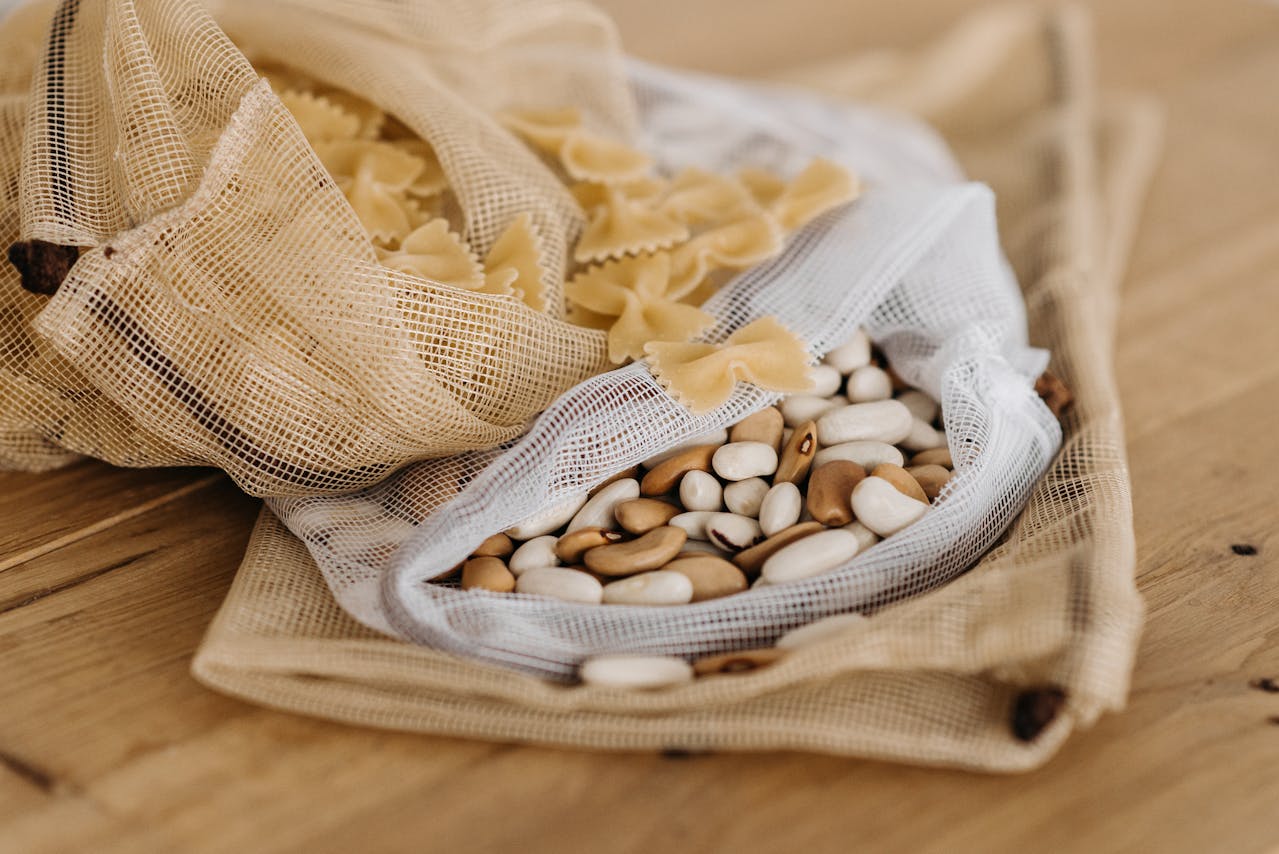
Rice, farro, quinoa, lentils, pasta, potatoes. Pick one or two that your household actually enjoys and keep them stocked at all times. These are your base. They stretch any meal, add substance, and absorb whatever flavors you build around them.
Rice is the most flexible of all. White rice pairs with virtually anything from stir-fries to curries to simple fried eggs. Brown rice adds a nutty depth to grain bowls and salads. A pot of rice cooked at the start of the week becomes the foundation of at least four or five different meals.
Pasta deserves its own mention because it moves from pantry to plate faster than almost anything else. With nothing more than olive oil, garlic, and a handful of pantry staples, you can have dinner on the table in twenty minutes.
Potatoes are underrated as a weeknight staple. Roast them with olive oil and salt and they become a side dish. Cube and saute them and they become a hash. Mash them and they become the base for a dozen different toppings.
A Protein That Keeps
Canned beans, canned chickpeas, canned tuna, dried lentils, eggs. These are the proteins that require no thawing, no advance planning, and no special technique. They sit quietly in your pantry or fridge until you need them, and then they do a lot of work very quickly.
Eggs are arguably the most versatile protein in existence. Scrambled, fried, poached, hard-boiled, baked into a frittata, whisked into fried rice. They take on flavor easily, cook in minutes, and pair with almost every ingredient in your kitchen.
Canned beans are a close second. White beans stirred into a simple broth with greens and garlic become a hearty soup. Chickpeas roasted with olive oil and spices become a crunchy snack or salad topper. Black beans warmed with cumin and lime become a taco filling in under ten minutes.
The key with pantry proteins is seasoning. On their own they can be bland. But with the right aromatics and acid, they become something genuinely craveable.
An Allium
Onions, garlic, shallots, scallions. This category is the foundation of flavor in nearly every cuisine on earth. Without it, food tastes flat. With it, even a simple dish of beans and rice tastes like something you actually want to eat.
Garlic and onion are the pair you want on hand always. Together they form the base of soups, stews, sauces, stir-fries, roasted vegetables, and braised meats. Learning to cook them properly, low and slow until they are soft and sweet, is one of the highest-return skills in home cooking.
Scallions do different work. They are bright, sharp, and fresh, which makes them perfect as a finishing element on top of dishes that need a little lift. Keep a bunch in the fridge and use them the way a restaurant would, as a garnish that also adds flavor.
An Acid

Lemons, limes, red wine vinegar, apple cider vinegar. Acid is the ingredient that home cooks most consistently underuse, and it is the reason restaurant food often tastes better than the same dish made at home.
Acid brightens. It wakes up flavors that have gone flat. It balances richness and adds contrast. A squeeze of lemon over roasted vegetables just before serving makes them taste more like themselves. A splash of vinegar in a pot of beans rounds out the whole dish.
Keep at least one citrus fruit and one bottle of vinegar in your kitchen at all times. Use them more freely than you think you should. When a dish tastes almost right but not quite, the answer is usually more acid.
A Fat with Flavor
Olive oil, butter, tahini, coconut milk. Not all fats are equal when it comes to flavor contribution. A good olive oil does not just cook your food, it seasons it. It adds body, richness, and a fruity depth that neutral oils simply cannot match.
Use a mid-range olive oil for everyday cooking and a better one for finishing dishes, drizzling over hummus, dressing salads, or spooning over soup. The difference in flavor is significant and the cost difference is not as large as people assume.
Butter builds richness in pasta sauces, roasted vegetables, and scrambled eggs. A small amount added at the end of cooking, a technique called mounting, creates a silky texture that transforms a simple pan sauce into something that feels restaurant-quality.
Tahini and coconut milk are worth keeping on hand if your cooking leans toward Mediterranean or Southeast Asian flavors. Both add creaminess and depth without requiring any additional technique.


