
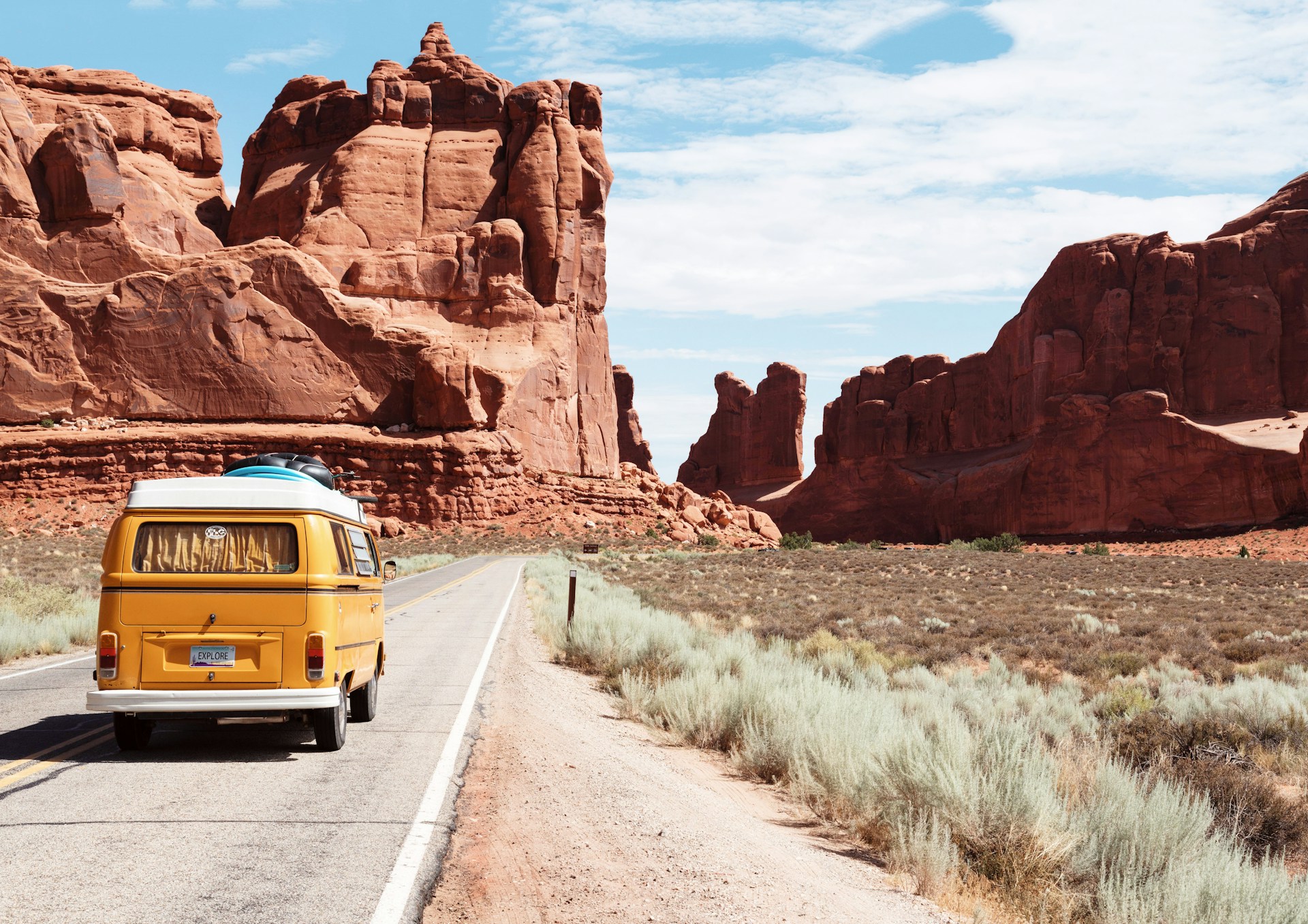
There is something almost mythological about the road trip. The open highway, the playlist on shuffle, the vague sense that anything could happen once you leave your zip code behind. But for all its romance, a poorly prepared road trip can unravel fast — a dead phone battery here, a forgotten snack there, and suddenly the adventure feels a lot more like an ordeal.
Whether you are cruising the Pacific Coast Highway or cutting across the plains on a cross-country haul, being prepared is what separates a great story from a bad one. Here is everything you need to pack, plan, and know before you go.
MEET THE EXPERT
- Christy Kinn, Full time nomad and avid road tripper (with over 300,000 miles road-tripped in my life), Christy Found It
Start with the car, not the bag
Before you throw a single thing into the trunk, your vehicle deserves a thorough once-over. Check the tire pressure — including the spare — and look at the tread depth. Low tread on a rainy mountain road is not a risk worth taking. Top off the oil, coolant, brake fluid, and windshield washer fluid. If you are due for an oil change, do it now rather than 400 miles from the nearest mechanic.
“Car troubles can absolutely ruin your road trip. Every time I fill up with gas, I do a full walk around the vehicle visually checking the tires, taking a quick peek under the body of the vehicle to make sure no parts are falling off (remind me to tell you about that time my muffler was inches from falling off completely and I just happened to notice it when I was filling up and could get it taken care of immediately before it was a trip-ruining surprise), and making sure everything else looks as it should” declares Christy Kinn.
It is also worth having a basic car emergency kit in the trunk at all times, not just for road trips. This should include jumper cables or a portable jump starter, a reflective triangle or flares, a tire repair kit or can of Fix-a-Flat, a multi-tool, and a pair of work gloves. If you are heading somewhere remote, add a tow strap and a gallon of water for the radiator.
Navigation: do not rely on one source
Your phone’s GPS is brilliant — until you lose signal on a two-lane road through the Nevada desert. Download offline maps before you leave. Google Maps and Maps.me both let you save entire regions for offline use, and it takes only a few minutes to set up at home with a solid Wi-Fi connection.
A paper map still has value. It sounds retro, but being able to see the entire region at a glance — without squinting at a 6-inch screen — is genuinely useful for planning detours or understanding your general orientation. Gas station maps are fine; a proper road atlas is better.
“A road trip is a way to disconnect and experience new adventures. Using a paper map when planning helps give you a different perspective on your journey, and referring back to the map along the way is often one of my favorite parts of route planning.” remarks Christy Kinn. “Once the trip is over, the paper map can be added to a junk journal or added to a photo book with photos and other trinkets from the trip.”
If you are doing serious off-roading or hiking as part of the trip, look into a dedicated GPS device or a satellite communicator like a Garmin inReach. These work even where cellular networks have given up entirely.
Tech and power essentials
A dead device on a road trip is almost a philosophical crisis. Pack a car charger with enough ports for everyone in the vehicle — ideally one with USB-C fast charging. A high-capacity power bank is equally important for charging devices when the car is off or when you are away from it. Aim for at least 20,000 mAh if you plan to be out more than a day.
A good Bluetooth speaker transforms rest stops and campsite evenings. A dash cam, while not strictly essential, is increasingly worth having — it provides peace of mind and clear documentation if you are ever in an accident. And if you are driving unfamiliar roads in bright sun, do not underestimate polarized sunglasses: they reduce glare in ways that genuinely affect driving safety.
Food and water: think beyond gas station snacks
A cooler is one of the best investments you can make for a road trip. Even a modest soft-sided model keeps drinks cold, stores leftovers from restaurant stops, and means you can buy groceries at a supermarket instead of paying twice as much for the same thing at a tourist-area convenience store.
Christy Kinn mentions that she a secret lover of junk food (me, too, Christy!). To avoid busting her budget and waistline, she will “make a special trip to my local low cost grocery store before I leave and buy ALL the junk I know I would pick up at a gas station. That way I indulge in the snacks I want, but skip the expense of buying them along the way and have them ready in the cooler or the snack bag for the exact moment I crave them”
In addition stock a mix of real food and snacks. Sandwiches, wraps, cheese, fruit, and cut vegetables hold up well. Trail mix, nuts, jerky, and protein bars are dense and satisfying without being messy. Avoid anything that melts, crumbles, or requires two hands to eat — the driver will thank you.
Water is non-negotiable. Bring more than you think you need, especially in summer or in arid climates. A reusable water bottle per person, plus a larger jug as a reserve, is a reasonable baseline.
A first aid kit you have actually looked inside
Most people own a first aid kit and have no idea what is in it. Before you leave, open yours and make sure it is actually stocked. At minimum it should contain bandages in multiple sizes, antiseptic wipes, antibiotic ointment, gauze pads, medical tape, pain relievers (ibuprofen and acetaminophen), antihistamines, anti-diarrheal medication, and any prescription medications for everyone in the car.
Add some trip-specific items depending on your destination: blister treatment if you plan to hike, moleskin, sunscreen (SPF 30 or higher), aloe vera gel for sunburn, and insect repellent. Altitude sickness medication is worth discussing with a doctor if you are heading significantly above sea level.
Traveling with pets: keep them safe and settled
If a four-legged passenger is coming along, a little extra preparation goes a long way. The single most important thing is a proper restraint — a crash-tested harness that clips into the seatbelt, or a secured crate. An unrestrained dog in a sudden stop becomes a projectile, and it is a risk not worth taking for anyone in the car.
“I travel with my 12 pound rescue dog, and treat him the same way I would my best friend. ” remarks Christy Kinn. “I make sure his favorite blanket is on the seat (that saves my seat from dog scratches, hair and general dog smells), that he wears his “seat belt”, and that I have water and snacks handy for him as well each time we stop. I also always get out of the car first, walk around and look at the area I’ll be walking him to make sure it’s safe (and free of food scraps or other questionably edible items, my little dog will ANYTHING he finds on the sidewalk”
Bring enough of your pet’s regular food for the entire trip, plus a day or two extra. Switching food on the road is a reliable way to end up with an unhappy stomach and a very unhappy car. Pack collapsible bowls for food and water, and stop every two to three hours so they can stretch, drink, and relieve themselves — roughly the same schedule a human road tripper would want anyway.
A familiar blanket or toy in their space reduces anxiety significantly, especially for animals who are not seasoned travelers. If your pet tends toward motion sickness or travel stress, talk to your vet before leaving — there are safe, effective options ranging from calming supplements to prescription medication.
Keep a copy of vaccination records and, if crossing state lines, check whether a health certificate is required. Some states and most campgrounds have specific rules about pets, so it is worth a quick look before you arrive somewhere and find out the hard way.
Finally, never leave a pet alone in a parked car. Even on a mild day, interior temperatures rise dangerously fast — what feels like a quick errand can turn into an emergency.
Comfort makes the miles go faster
Hours in a car seat are hard on the body. A lumbar support pillow makes a noticeable difference on long days. Neck pillows for passengers let people nap without waking up with a crick. A lightweight blanket is useful both for cold mornings and for passenger comfort.
Wet wipes and hand sanitizer are underrated essentials — gas station bathrooms are not always equipped with soap. A small trash bag keeps the car from becoming a rolling landfill by day three. Sunshades for the rear windows help if you have kids or if anyone wants to sleep in the back.
Documents and the boring stuff that matters
Driver’s license, vehicle registration, and proof of insurance — know where they are before you leave the driveway. If you are crossing state lines or into another country, check whether additional documentation is needed. A roadside assistance membership (AAA or your insurance provider’s equivalent) is worth activating before a long trip rather than after a breakdown.
Take a photo of your car parked at each major stop. It sounds paranoid, but it tells you exactly where you left it in an unfamiliar city and provides documentation of the car’s condition at every stage of the trip.
The intangibles
A great playlist — or several, curated by everyone in the car — is as essential as the tire pressure. Podcasts, audiobooks, and language courses all make the miles feel shorter. Build in unscheduled time. The best road trip moments are often the ones that were never on the itinerary: the roadside diner someone spotted at 60 mph, the overlook you almost drove past.
Christy Kinn’s pro-tip for the intangibles, “just like downloading offline maps, download your podcasts or audiobooks before you leave. Nothing worse than a long stretch of highway with no cell service and no tunes or books to keep you company”
Leave a rough itinerary with someone at home. Not because anything will go wrong, but because knowing someone has a general idea of where you are is a small peace of mind that costs nothing.
The rest is just driving.