
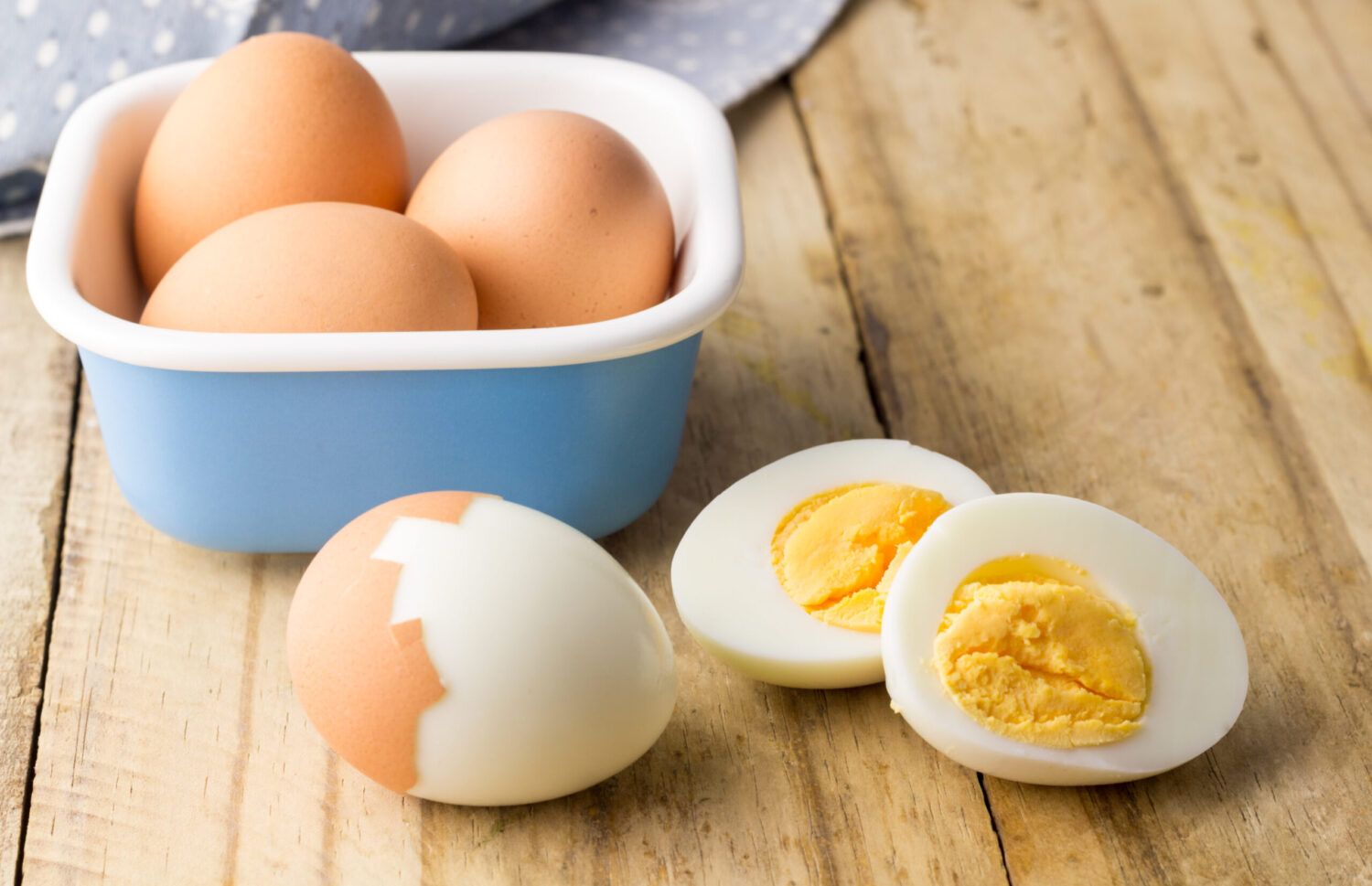
If you’ve spent any time in the kitchen wrestling with hard boiled eggs — cracked shells, stubborn peeling, that dreaded gray-green ring around the yolk — you’ve probably wondered if there’s a better way. Alton Brown has an answer, and it starts with a name change. His recipe isn’t called “Hard Boiled Eggs.” It’s called “Hard Not-Boiled Eggs,” and that distinction is the entire point.
The Alton Brown hard boiled eggs method, first featured in Season 2 of Good Eats: Reloaded, replaces boiling water with steam, and the difference in outcome is significant enough to make you rethink the way you’ve been cooking eggs your whole life.
KEY POINTS
- Steaming eggs instead of boiling them gives you better control over the final texture.
- Yolk centering is a real, solvable problem — storing your carton on its side for five days before cooking is an easy fix that most recipes never mention.
- The peeling window is short and intentional — you have 30 seconds to 2 minutes after steaming to peel the eggs easily, and letting them cool too long makes the job significantly harder.
- Equipment matters more than it seems — a tight-fitting lid is non-negotiable for this method, since any steam that escapes throws off the cook time and consistency.
- Patience at the end of cooking is just as important as precision during it — slicing eggs before they’ve cooled fully undermines everything the method sets out to achieve..
Why Steam Instead of Boiling Water?
So why steam instead of boiling water? Brown explains it plainly: boiling water is physically violent. Eggs get jostled and cracked before they’ve even had a chance to cook properly, and when you drop cold eggs into hot water, the temperature of that water drops immediately, throwing off your timing. Steam doesn’t have those problems. At standard atmospheric pressure, steam holds a steady 212 degrees Fahrenheit regardless of what you put into the pot. It’s a more stable, gentler cooking environment, and that stability is exactly what you want when you’re working with something as finely calibrated as a perfectly cooked egg.
The Technique Is Simpler Than You’d Expect
The method itself is refreshingly simple. You add about an inch of water to a saucepan fitted with a tight lid, bring it to a boil, then place your eggs into a folding steamer basket and lower them carefully into the pot. Put the lid on and set your timer. Brown calls for exactly 11 minutes for a fully set egg that still has a slightly creamy yolk, or 12 to 13 minutes if you want something firmer throughout. That’s essentially the whole method. No special gadgets, no complicated prep work while the water heats up, and the total active time lands at around 20 minutes. For a result this reliable, that efficiency feels almost suspicious.
The Step That Happens Days Before You Cook
One of the most interesting parts of the Alton Brown hard boiled eggs recipe isn’t about cooking at all — it happens days before you turn on the stove. Brown recommends storing your eggs on their sides in the refrigerator for at least five days before cooking. The reason comes down to yolk placement. When an egg sits upright in a standard carton, the yolk tends to drift toward the bottom of the shell. For most cooking applications that doesn’t matter, but if you’re making deviled eggs or any dish where you’ll be slicing the egg in half and displaying the yolk, an off-center result is genuinely frustrating. His fix is to secure the carton with rubber bands and lay it on its side in the fridge. Gravity does the centering work gradually over those five days. It’s the kind of small, deliberate detail that separates a good cook from a thoughtful one, and it’s classic Brown — grounded in science, easy to execute, and completely overlooked by most recipes.
Alton Brown’s Hard Not-Boiled Eggs Recipe
1
Add an inch of water to a 3-to 4-quart saucepan with a tight-fitting lid. Bring the water to a boil over medium-high heat. Fill a large bowl with room temperature water and have it standing by near the cooktop.
2
When the water reaches a boil, retrieve eggs from the refrigerator and place in a folding steamer basket. Carefully lower into the pot, cover, and steam for exactly 11 minutes for a set egg that still has a slightly creamy yolk. If you’re looking for something harder, go for 12 to 13 minutes.
3
Carefully remove the steamer basket and transfer the eggs to the bowl of water. Allow them to cool down just enough to handle comfortably, 30 seconds to 2 minutes max. Carefully crack the shell by tapping on a flat surface and peel under the water, being careful to remove both the shell and the membrane just underneath.
4
Pat dry and consume whole while still warm. If you’re planning to split in half for say, deviled eggs, cool thoroughly before slicing.
Peeling: The Part Most Recipes Get Wrong
The post-cooking process is equally considered. Before you even start steaming, Brown instructs you to fill a large bowl with room-temperature water and keep it nearby on the counter. When the eggs come out of the steamer, they go directly into that bowl. Here’s the timing detail that matters most: you only let them cool for 30 seconds to 2 minutes, just enough to handle them comfortably without burning yourself. That window is short on purpose. Peeling while the egg is still quite warm is significantly easier than peeling a cold one, and this is one of the main reasons the steam method earns so much praise from people who struggle with shells that chip and tear and take chunks of white with them. You crack the shell against a flat surface and then peel it under the water in the bowl, which also helps catch shell fragments and keeps the membrane from sticking. The result is a smooth, clean white that looks as good as it tastes.
TIP
If you have a compost bin to help support your garden, eggshells are a welcome addition. They break down over time and help balance the pH of acidic compost while adding minerals back into the mix. Crush them before adding to your pile to speed up decomposition.
Does It Actually Work?
From a practical standpoint, this recipe delivers on its promises. The 11-minute time produces a yolk that is fully cooked but not chalky or dry. There’s a subtle density in the center that reads as slightly creamy rather than powdery — a meaningful distinction if you’ve been eating overcooked yolks for years without realizing there’s a better version. The whites are tender and not at all rubbery, which can be a real pitfall with steaming if the timing goes wrong. Brown’s specific minute counts remove the guesswork entirely, and after a batch or two you’ll find the method feels completely natural.
What Equipment Do You Need?
The equipment requirements are minimal but worth noting. A folding steamer basket is the one item you might not already own, though they’re inexpensive and easy to find. More important is having a saucepan with a genuinely tight-fitting lid. A loose lid lets steam escape and undermines the whole approach. If your lid isn’t snug, you’ll notice longer cook times and less consistent results. Beyond those two items, nothing else is required.
One Final Note on Timing
Brown also includes a practical note about timing your use of the eggs after cooking. If you’re eating them warm and whole, go right ahead — they’re excellent fresh from the pot. But if the plan is to make deviled eggs or anything else that requires cutting the egg cleanly in half, he advises cooling them thoroughly before slicing. A warm egg cuts unevenly and the yolk tends to crumble, which defeats the purpose of all that careful yolk-centering work you did in the refrigerator. A little patience at the end preserves everything you set up at the beginning.


