
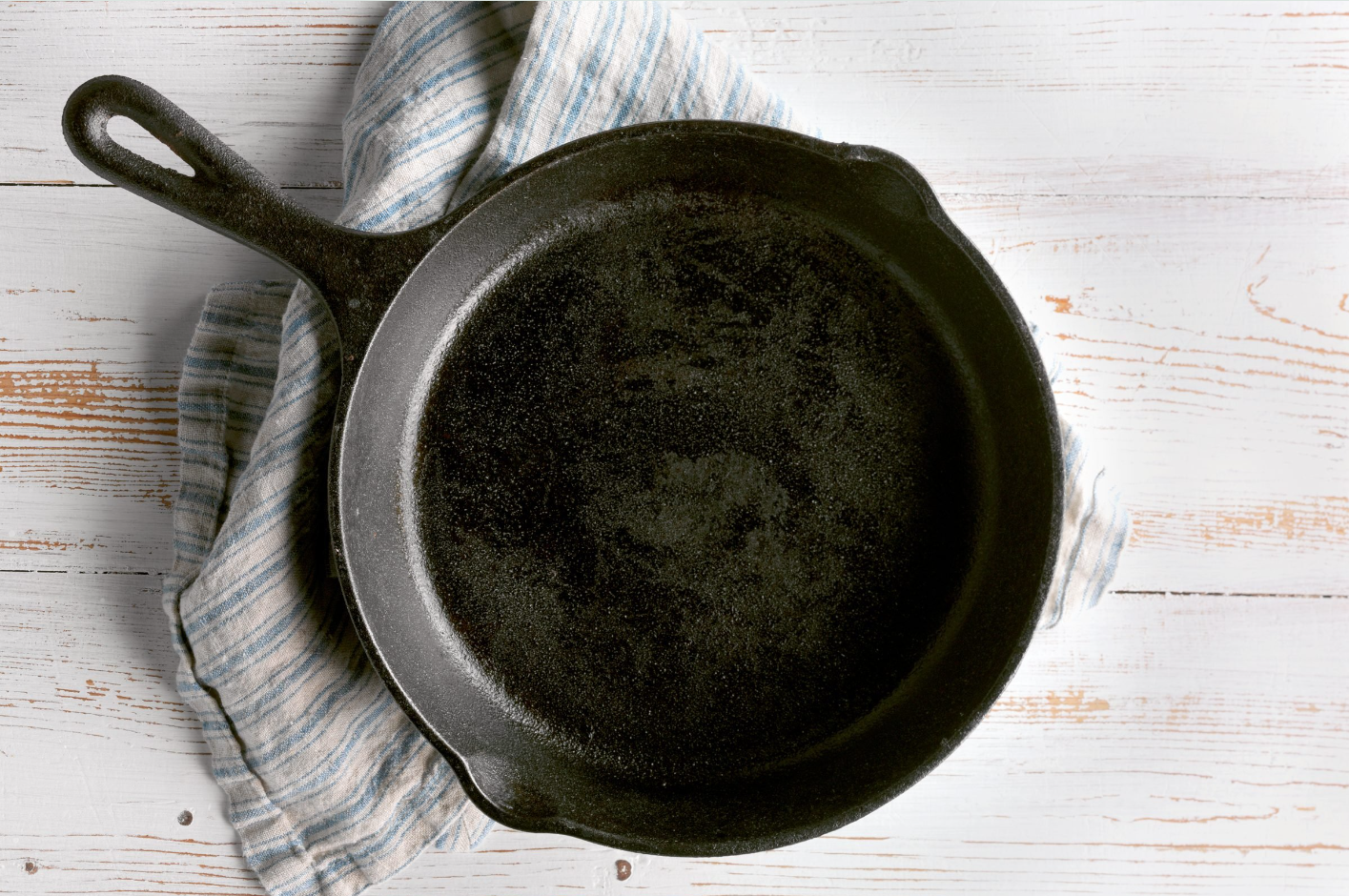
If you’ve ever asked this question out loud in a kitchen, there’s a good chance someone nearby gasped in horror. The prohibition against using dish soap on cast iron is one of the most passionately defended rules in home cooking passed down from grandmothers, enforced by seasoned home cooks, and repeated so often it’s practically folklore.
But here’s the thing: it’s mostly a myth.
You can use dish soap on cast iron. The real answer, like most things in cooking, is just a little more nuanced than a flat yes or no.
Where Did This Rule Come From?
The soap-will-ruin-your-cast-iron belief has real historical roots. Old-fashioned soaps were made with lye (sodium hydroxide), a highly alkaline compound that could genuinely strip the seasoning from a cast iron pan with repeated use. If your great-grandmother told you never to use soap on cast iron, she wasn’t wrong for her era. She was working with caustic soaps that were nothing like what you’d find in a modern kitchen.
Today’s dish soaps (think Original Dawn, Palmolive, or any gentle liquid soap) use much milder surfactants. They’re designed to cut through grease without being harsh on your hands, let alone a thick layer of polymerized oil.

What Is Seasoning, Anyway?
To understand why the old rule doesn’t quite apply anymore, it helps to know what cast iron seasoning actually is. Seasoning isn’t a coating you can soap off in one scrub. It’s a layer of polymerized oil that has been baked into the iron through heat. Over time and with use, those layers build up into the smooth, semi-nonstick surface that cast iron enthusiasts love.
Because it’s chemically bonded to the iron, a quick wash with dish soap won’t dissolve it. You’d have to work pretty hard by scrubbing repeatedly with harsh cleaners or soaking for long periods to actually damage good seasoning.
A few drops of original brand dish soap and a gentle scrub? Your pan will survive just fine.
When Soap Is Totally Fine
Using a small amount of dish soap is perfectly acceptable in a few situations:
After cooking something strongly flavored. Fish, certain spices, or heavily seasoned dishes can leave behind stubborn odors that plain water won’t fully remove. A quick soap wash solves this without harming your pan.
When the pan is visibly dirty. If you’ve got stuck-on food or residue that water and a brush aren’t handling, mild soap is a reasonable tool.
When you’re new to the pan. If you just bought a cast iron skillet (especially one pre-seasoned from the store) a light soap wash before first use is a good idea to remove any factory residue or packaging materials.
The key word in all of these is quick. Wash, rinse, and dry promptly. Don’t let your cast iron soak in soapy water, and don’t put it in the dishwasher (that one really will strip your seasoning and invite rust).
One Exception: Avoid “Ultra,” “Powerwash,” and “Extreme” Formulas
Not all dish soaps are created equal. While standard dish soap is fine for cast iron, avoid products marketed with terms like “Ultra,” “Powerwash,” or “Extreme.” These formulas use significantly stronger degreasers and surfactants designed to cut through heavy grease fast, and that extra stripping power is exactly what you don’t want near your seasoning. Even a single wash with one of these aggressive soaps can degrade the polymerized oil layers you’ve worked to build up. Stick to a standard, original-formula soap and you’ll be in safe territory.
When to Skip the Soap
Soap isn’t always necessary, and many cast iron devotees prefer to avoid it out of habit. There’s nothing wrong with that approach.
For everyday cooking messes, a stiff brush or chain mail scrubber with hot water often does the job completely. Salt or baking soda can be used as a mild abrasive for stubborn bits. These methods are gentle and won’t even raise the question of soap damage.
If your pan is well-seasoned and you just made scrambled eggs or sautéed vegetables, you may not need soap at all. Hot water, a scrub, and a thorough dry is often plenty.
The One Rule That Actually Matters: Dry It Immediately
Here’s where cast iron really does demand special treatment, not in the washing, but in the drying. Cast iron is porous and rusts quickly when left wet. After washing (with or without soap), dry your pan immediately and thoroughly.
The best method: put it on the stove top over low to medium heat for a minute or two until all the moisture has evaporated. Then, while it’s still warm, rub a very thin layer of oil (flaxseed, vegetable, or any neutral oil) into the surface with a paper towel or spray with a thin layer of avocado oil. This maintains the seasoning and keeps the pan in great shape for the long haul.
Skip this step, and you’ll wake up to rust. No soap required.


