
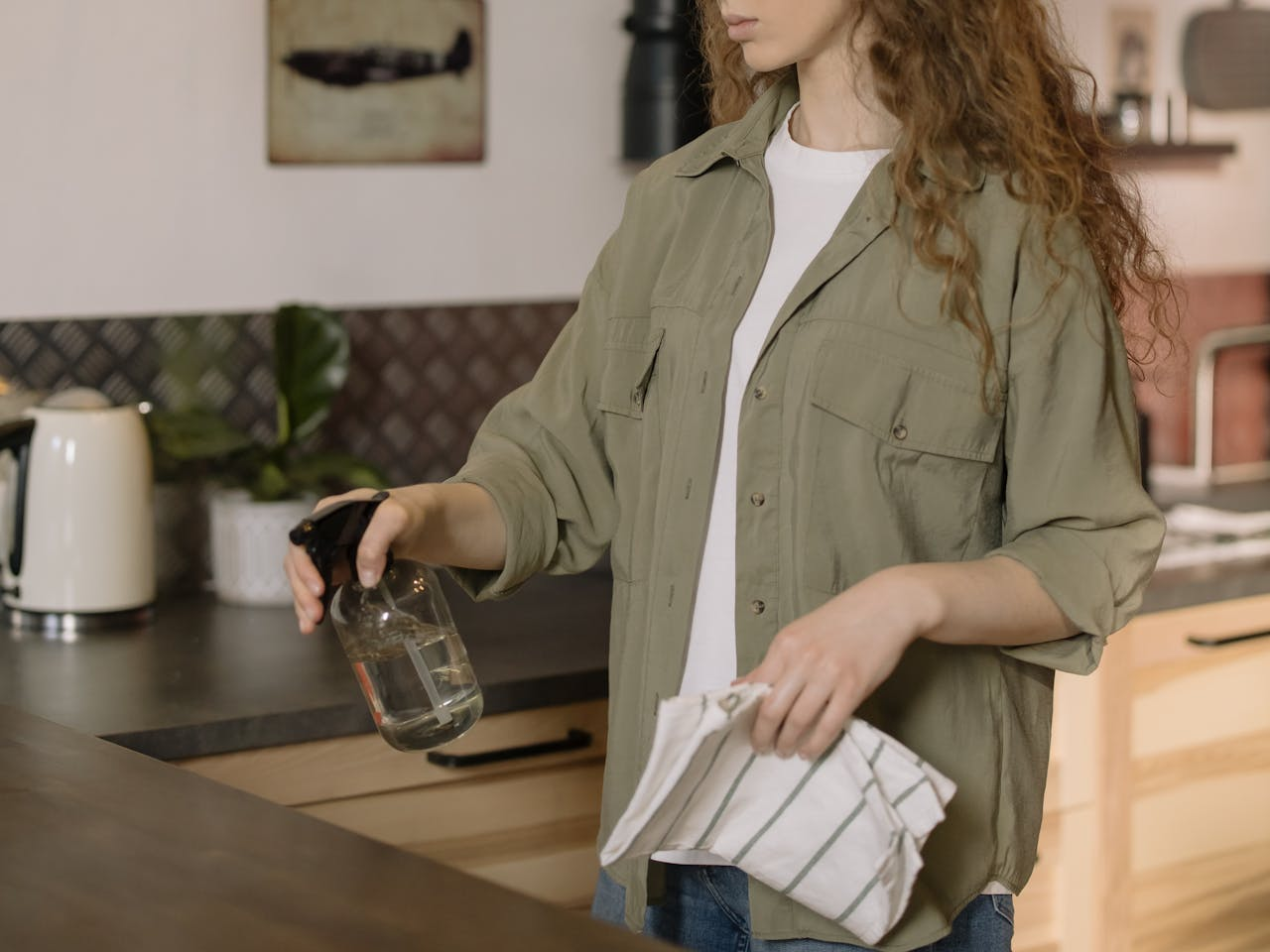
There’s a good chance you have both of them sitting in your kitchen right now — a box of baking soda shoved to the back of a shelf and a bottle of white vinegar lurking near the cooking oils. Most people treat them as single-purpose ingredients: baking soda for cookies, vinegar for salad dressing. But together (and separately), these two humble pantry staples are among the most powerful, affordable, and non-toxic cleaning agents you can find. No harsh chemicals, no expensive specialty products, no elaborate instructions.
Here are 10 genuinely useful household hacks that will make you look at both of them differently.
1. Unclog a Slow Drain Without Calling a Plumber
Before you reach for a bottle of chemical drain cleaner, try this: pour half a cup of baking soda directly down the drain, followed by half a cup of white vinegar. You’ll get a satisfying fizzing reaction — that’s the acid and base neutralizing each other, and the bubbling action helps break up grease and soap scum clinging to pipe walls. Let it sit for 15–20 minutes, then flush with a full kettle of boiling water. For minor clogs and slow drains, this works remarkably well, and it won’t corrode your pipes over time the way chemical alternatives can.
2. Deodorize Your Fridge (and Keep It That Way)
You’ve probably heard of putting an open box of baking soda in the fridge. What fewer people know is why it works: baking soda (sodium bicarbonate) is amphoteric, meaning it neutralizes both acidic and basic odor molecules rather than just masking them. Replace the box every three months, and for a deeper clean, wipe down fridge shelves with a solution of one tablespoon of baking soda dissolved in a quart of warm water. It cleans and deodorizes in one step, and unlike vinegar-based sprays, it won’t leave your leftovers smelling like a pickle jar.
3. Restore Grimy Grout
Mix baking soda with just enough water to form a thick paste. Apply it to tile grout with an old toothbrush, then spray white vinegar directly over the paste. It’ll fizz — let it work for a few minutes, then scrub. The combination of mild abrasive action from the baking soda and the acidity of the vinegar cuts through mildew and soap buildup that regular mopping leaves behind. Rinse with warm water and you’ll be surprised how white your grout looks. This trick works especially well in bathrooms and kitchen backsplashes.

4. Remove Stubborn Coffee and Tea Stains from Mugs
Fill the stained mug with equal parts warm water and white vinegar, let it soak for about 15 minutes, then scrub with a paste of baking soda. The vinegar loosens the tannin deposits responsible for those brown rings, and the baking soda acts as a gentle scrub. Your mugs will come out looking nearly new without scratching the surface — something that overly abrasive scrubbers often do.
5. Freshen Smelly Carpets and Rugs
Sprinkle baking soda liberally over your carpet — really coat it — and let it sit for at least 30 minutes (overnight is even better). Then vacuum it up thoroughly. The baking soda absorbs odors rather than covering them up. For pet smells or particularly stubborn spots, spray a light mist of diluted white vinegar over the area first, let it dry completely, then apply the baking soda. Don’t apply both wet at the same time on carpet, or you’ll create a paste that’s harder to vacuum out.
6. Clean and Deodorize Your Mattress
This is the same principle as the carpet hack, but applied to somewhere most people never think to clean. Strip the bed, sprinkle a generous layer of baking soda across the entire mattress surface, and let it sit for at least an hour — longer if you can manage it. Vacuum it off with an upholstery attachment. Do this every few months (especially great to do on a sunny day when you can open windows) and your mattress will stay fresher between replacements.
7. Make Your Stainless Steel Sink Shine
Wet the sink, sprinkle baking soda over the surface, and scrub with a soft cloth or sponge. Rinse, then wipe down with a cloth dampened with white vinegar. The vinegar removes water spots and leaves a streak-free shine that commercial stainless steel cleaners charge a premium to achieve. Dry with a clean cloth afterward to prevent new water spots from forming. Takes about three minutes total.
8. Eliminate Odors from Plastic Containers
Plastic food containers absorb odors over time — old pasta sauce, garlic, anything with a strong smell tends to linger no matter how many times you run them through the dishwasher. Fill the container with warm water and a tablespoon of white vinegar, let it soak for 15–20 minutes, then wash normally. For really stubborn smells, stuff the dry container with a crumpled piece of newspaper and a teaspoon of baking soda, seal the lid, and leave it overnight. The baking soda and newspaper work together to absorb the odor molecules completely.
9. Descale Your Kettle or Coffee Maker
Mineral deposits from hard water build up inside kettles and coffee makers over time, affecting both performance and taste. Fill your kettle halfway with equal parts white vinegar and water, bring it to a boil, then let it sit for 20–30 minutes before emptying and rinsing thoroughly. For coffee makers, run the same vinegar-water solution through a full brew cycle, followed by two cycles of plain water to flush it out. Your appliances will heat more efficiently and your coffee and tea will taste noticeably cleaner.
10. Unclog and Freshen a Garbage Disposal
Garbage disposals develop a distinctive smell over time from accumulated food residue on the blades and walls. Make baking soda and vinegar ice cubes: mix a solution of vinegar and water, pour it into an ice cube tray with a teaspoon of baking soda per compartment, and freeze. Drop a few cubes into the running disposal. The ice helps sharpen the blades while the baking soda and vinegar deodorize and cut through grease. It’s a multi-tasking hack that takes about 30 seconds once the cubes are ready.
A Note on Mixing
You’ll notice some hacks use baking soda and vinegar together, while others use them separately. That’s intentional. When you mix them directly, the fizzing reaction is useful for mechanical cleaning action — dislodging grime, clearing drains. But they also partially neutralize each other, which can reduce the effectiveness of both. For deodorizing or gentle cleaning, they often work better independently. Know the goal, and choose your approach accordingly.
Two ingredients. A fraction of the cost of specialty cleaners. No fumes, no residue, no mystery chemicals. Sometimes the best solutions really are already in your pantry.
Image credit: cottonbro studio | Pexels
